

Topic overview
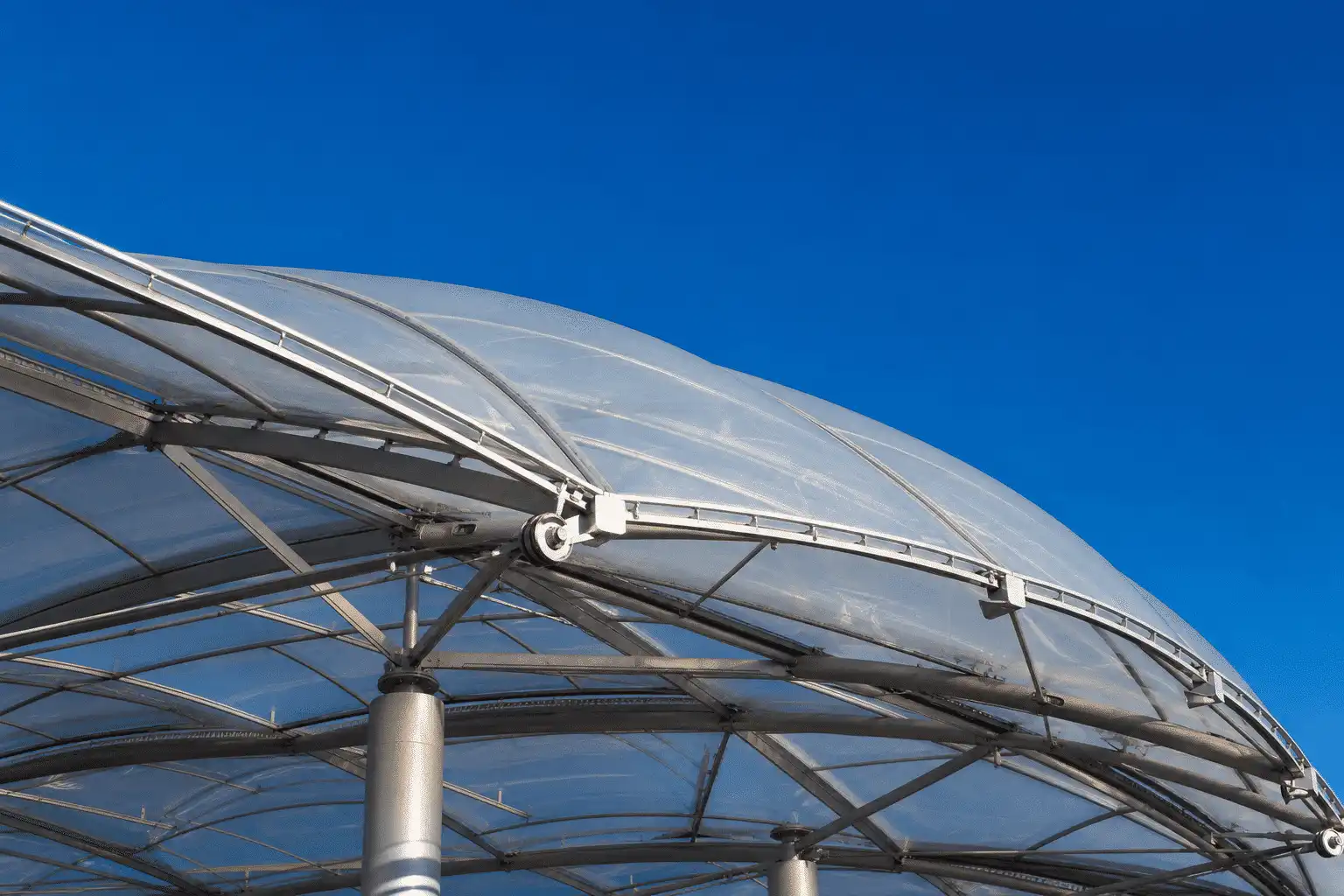
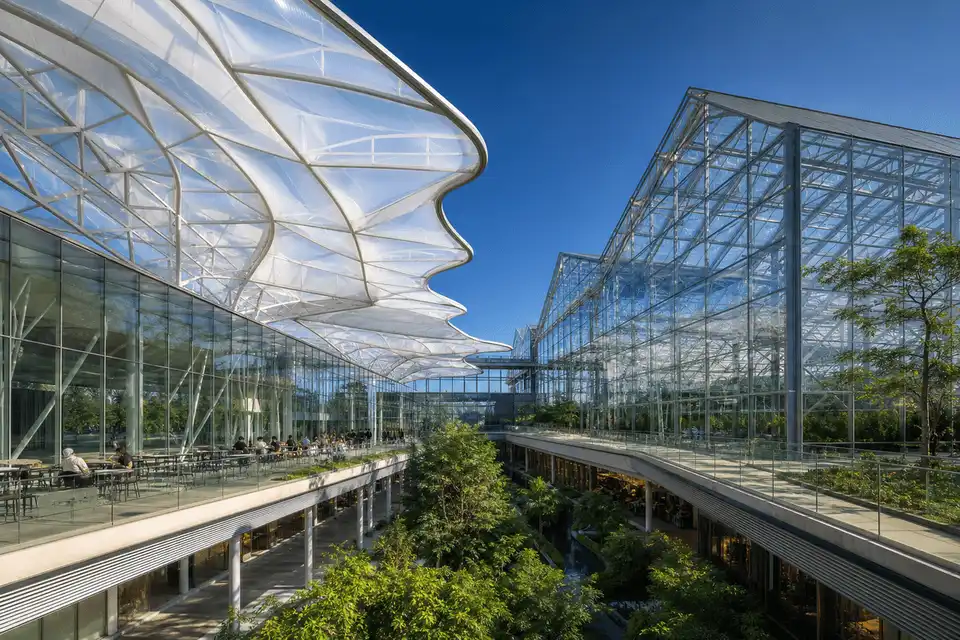
ETFE film is a fluoropolymer membrane widely specified for stadiums, airports, malls, greenhouses and commercial envelopes where daylight and low structural weight matter.
what is ETFE
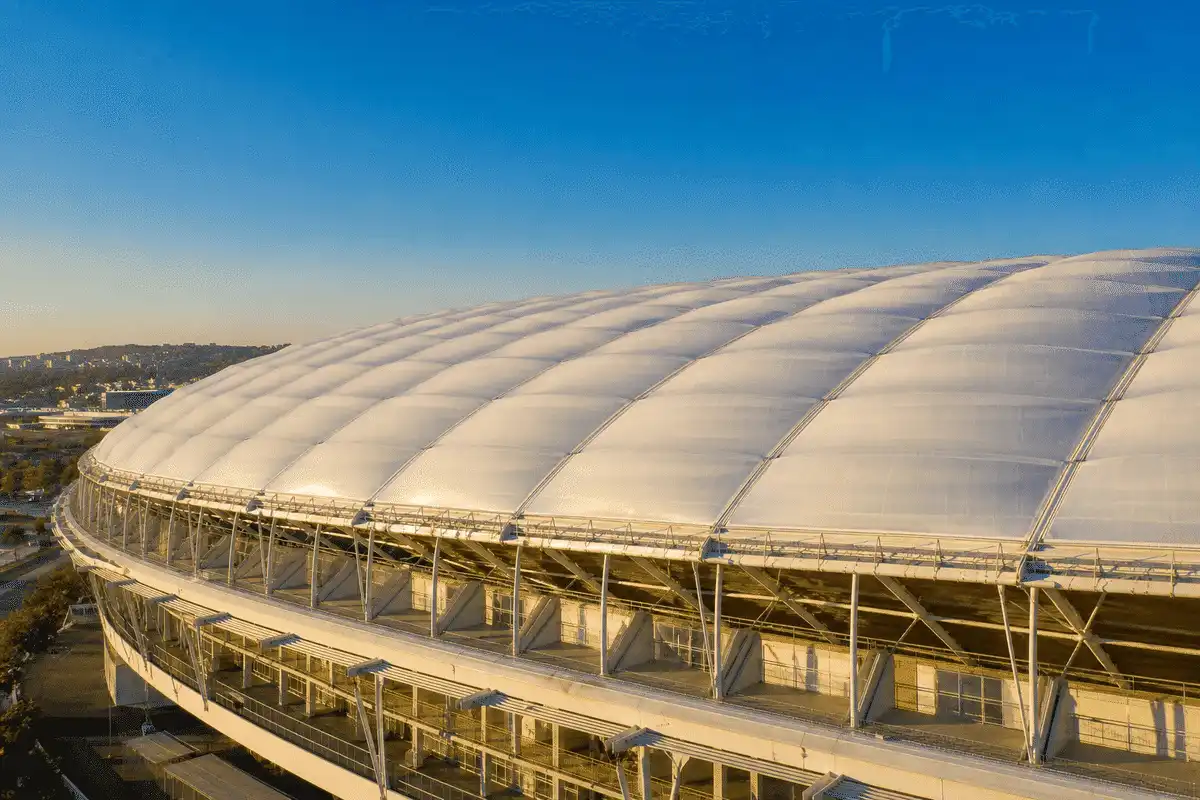
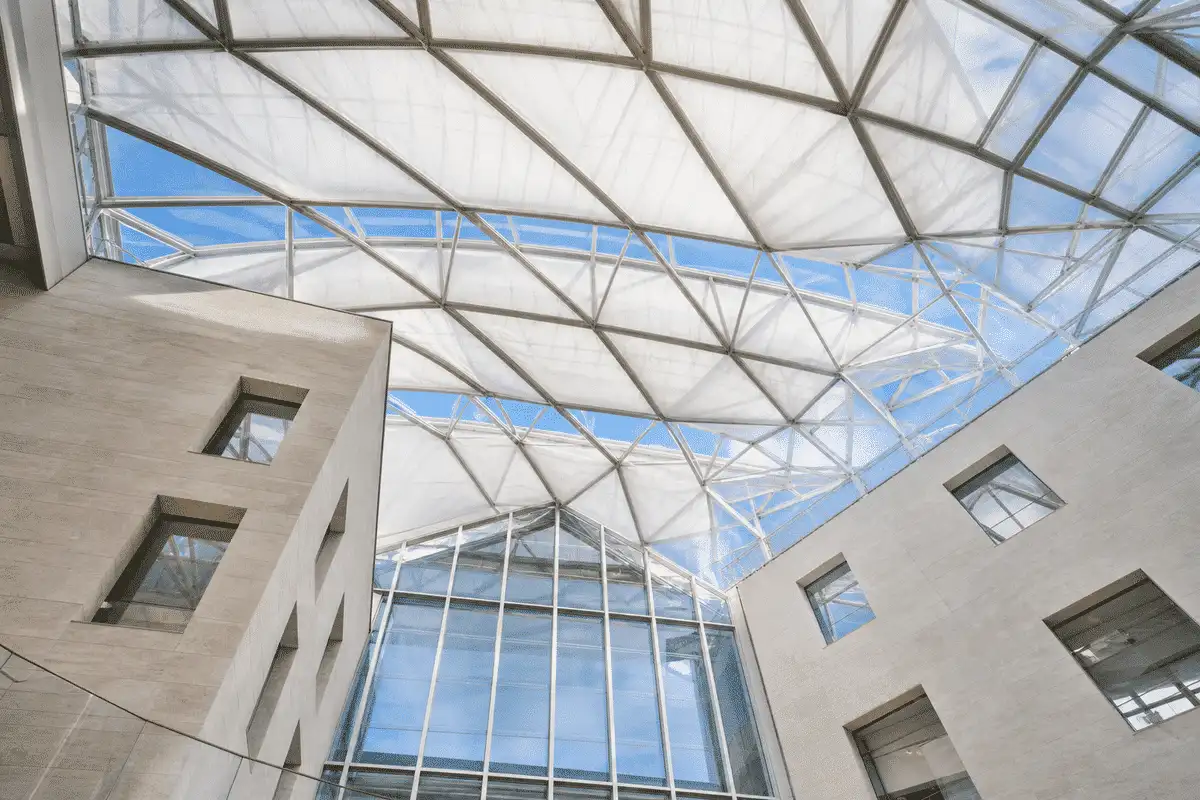
ETFE is a high-performance fluoropolymer film used for lightweight roofs, façades, skylights and cushions — delivering up to 95% natural light at a fraction of the weight of glass.
Introduction
ETFE (Ethylene Tetrafluoroethylene) is an advanced architectural membrane that combines high transparency, flexibility and weather durability for modern large-span buildings.
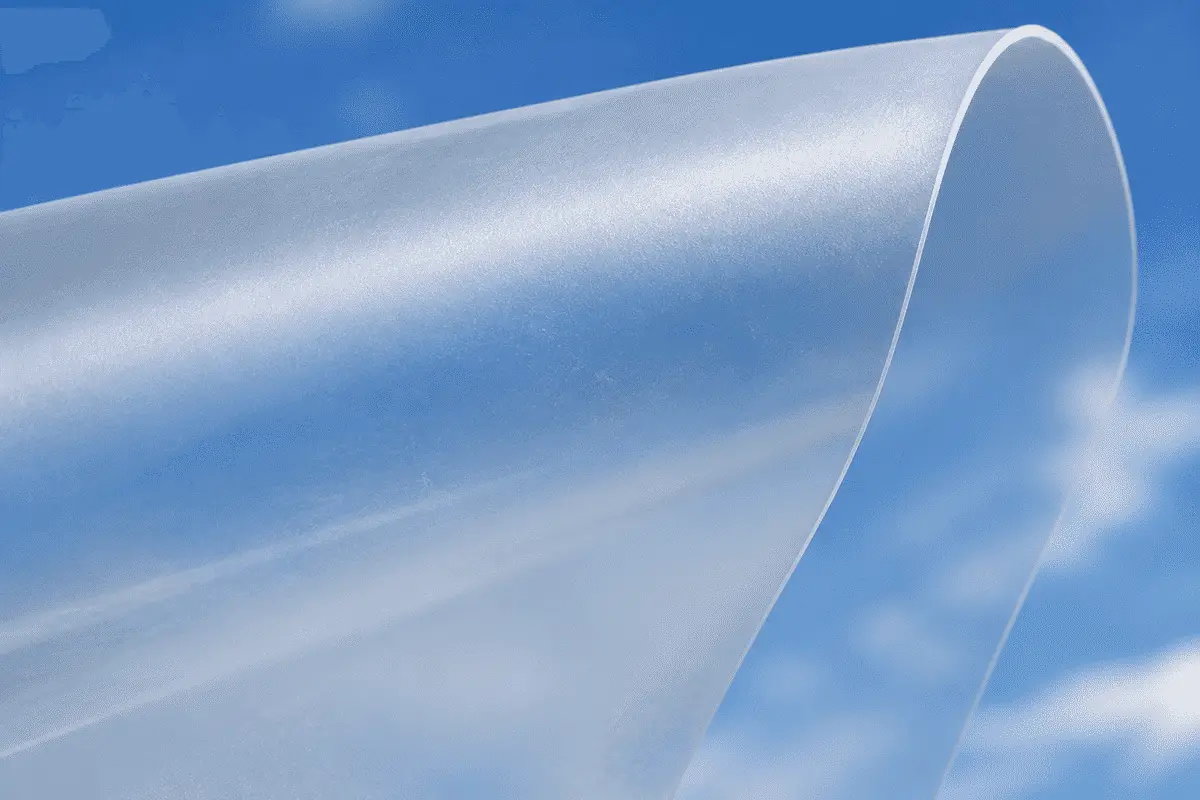
ETFE film is a fluoropolymer membrane widely specified for stadiums, airports, malls, greenhouses and commercial envelopes where daylight and low structural weight matter.
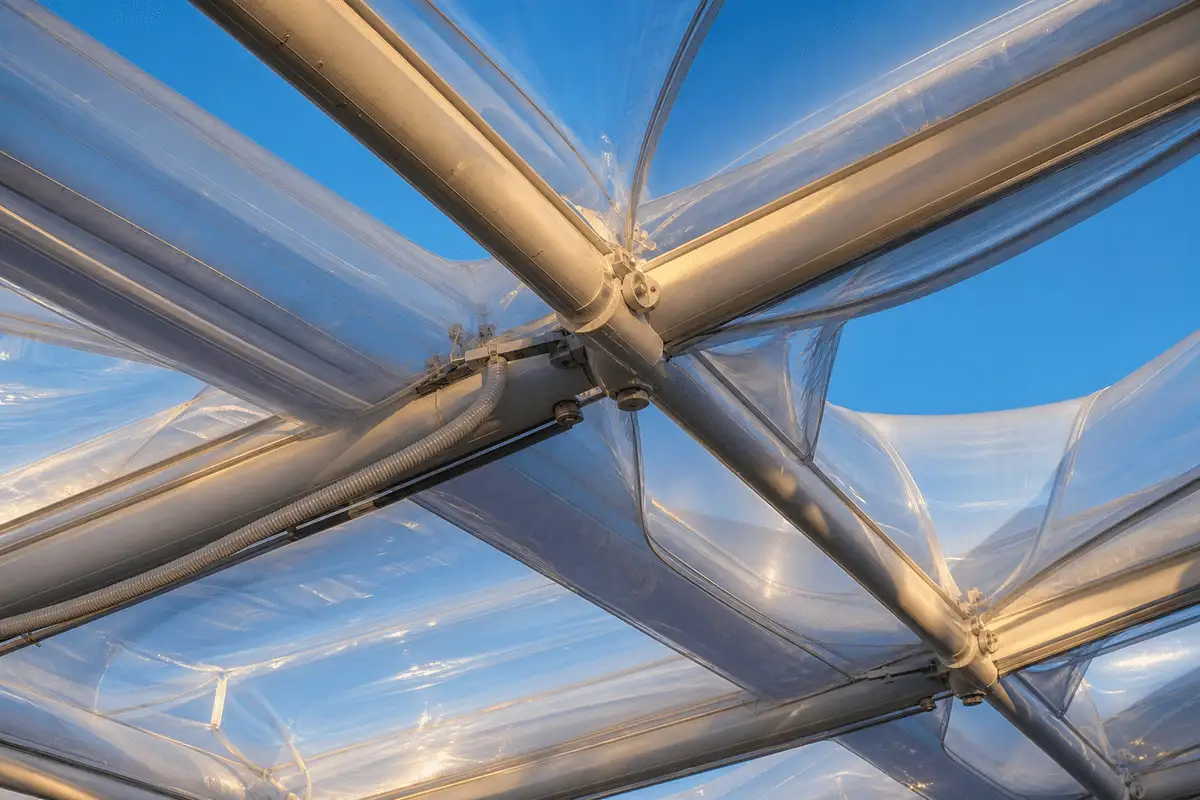
Architects and engineers use ETFE as a single-layer foil or as multi-layer air cushions on steel or cable primary structures, coordinating clamps, drainage and inflation where required.
Across aviation, sports, retail and horticulture, ETFE supports luminous interiors, faster installation and lower structural mass compared with conventional glazing systems.
Engineering
From chemistry and optical behaviour to cushion systems, this overview explains how ETFE works in architectural envelopes — without inventing uncertified performance claims.
Chemically, ETFE is a copolymer in the fluoropolymer family. Its low surface energy supports dust and water shedding, while film gauges are selected to match cushion layers, façades or greenhouse envelopes.
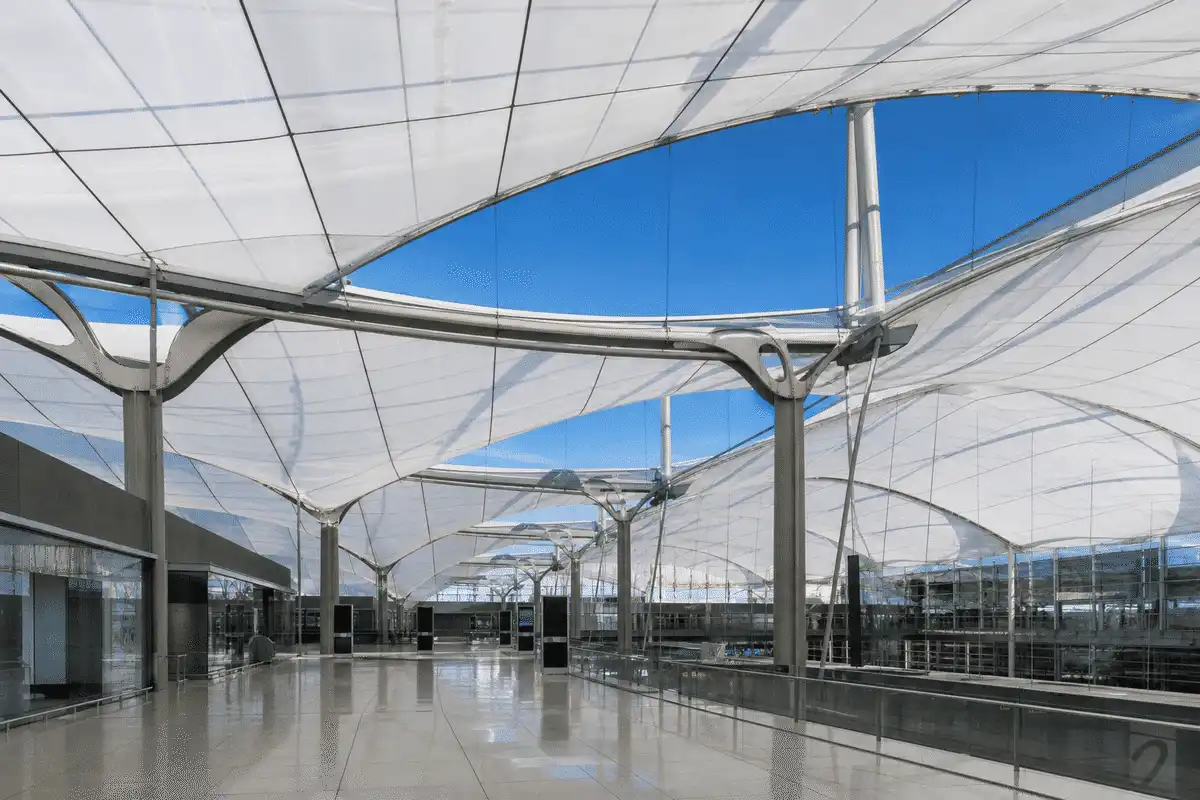
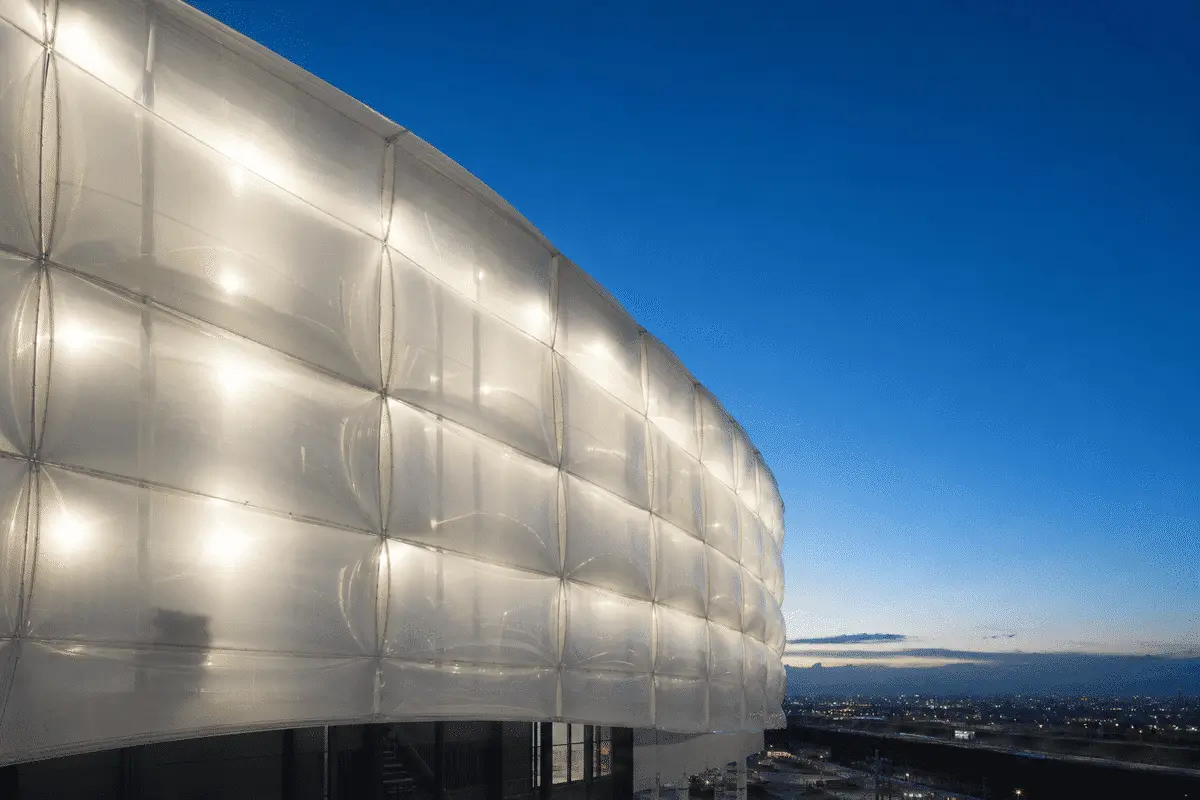
In cushions, sealed ETFE layers hold low-pressure air that stiffens the module and adds thermal layering. In single-layer roofs and canopies, pretensioned foil spans between structural members to shed weather and admit light.
Originally developed as an industrial fluoropolymer, ETFE was later adopted in architecture as a lightweight alternative to glass. Key concepts today include film thickness, frit or print for solar control, clamp detailing, cushion inflation zoning, and wind, snow and drainage coordination.
Specifications
Publish only values confirmed in knowledge docs. Use TBD where not approved.
| Parameter | Typical guidance | Notes |
|---|---|---|
| Material | ETFE (Ethylene Tetrafluoroethylene) | Architectural fluoropolymer film |
| Density | Approx. 1.70–1.75 g/cm³ | Typical / manufacturer-dependent |
| Areal weight | Approx. 0.3–1.0 kg/m² | Compared with ~25–30 kg/m² glass |
| Light transmission | Up to ~95% daylight | Depends on film, print and layers |
| UV transmission | Approx. 90–95% | Often useful for plant growth |
| Service temperature | Approx. −200°C to +150°C | Confirm with data sheets |
| Service life guidance | Typically 25–35+ years | Environment and detailing dependent |
| Water absorption | Nearly zero | Excellent weather barrier behaviour |
Values above are typical educational guidance from AAKS knowledge materials. Confirm manufacturer data sheets and project engineering before specification. Do not treat this page as a certified performance schedule.
Design
Successful ETFE design balances daylight targets, climate loads, structure, access and detailing — from early planning through installation readiness.
Define zones, daylight goals, solar-control strategy and interfaces with MEP, drainage and maintenance access before locking module sizes.
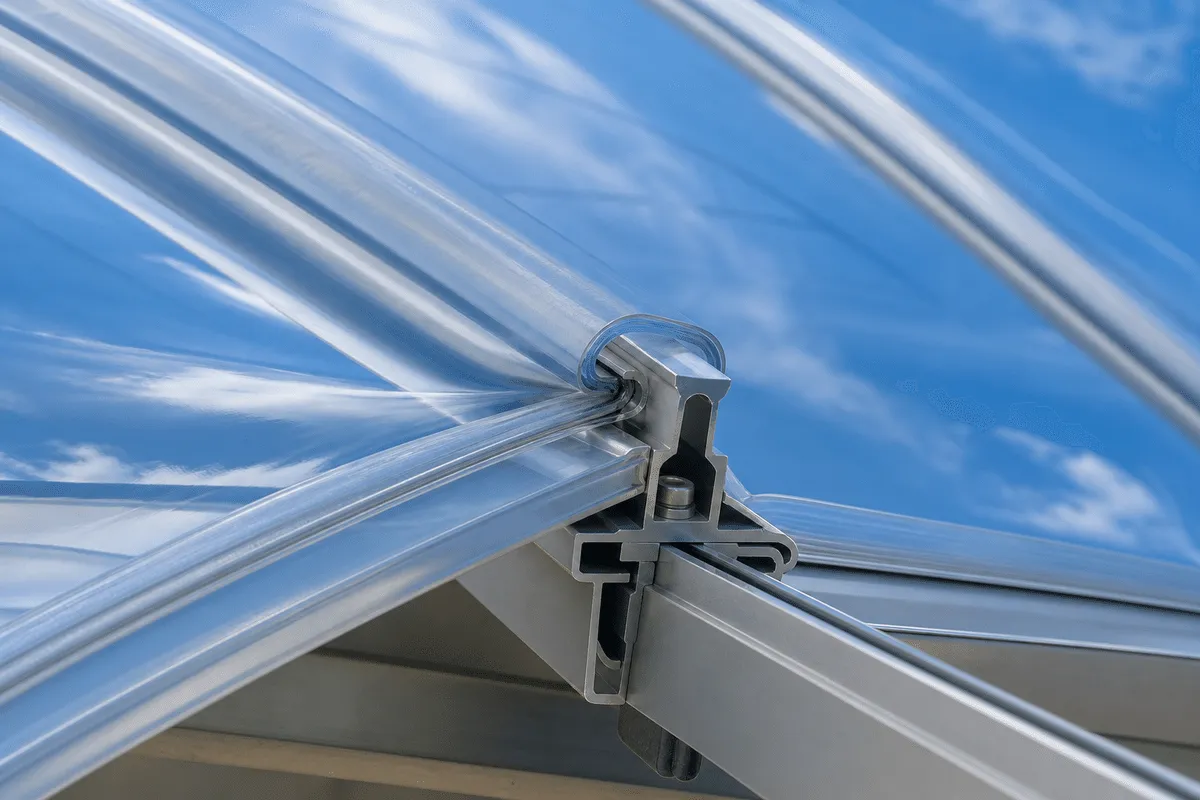
Coordinate primary structure, edge clamps, cable or grid geometry, wind and snow cases and cushion pressure logic with the structural engineer.
Select film thickness, layer count, clear or printed finishes and hardware to match span, climate and visual intent. See the thickness guidance in our Technical Library hub for planning ranges.
Plan deliveries, temporary weather seals, crane or access routes and inflation commissioning windows around live-site constraints.
Benefits
ETFE is specified where luminous space, low self-weight and durable outdoor performance matter more than conventional heavy glazing.
High daylight transmission, flexibility for freeform geometry (typical elongation guidance around 300%), tensile strength typically about 40–55 MPa depending on grade, strong UV and weather resistance, and multi-layer cushion options for improved thermal layering.
Lighter structures can reduce steel and foundation demand; prefabrication often shortens site time compared with complex glazing packages.
Durable outdoor performance, self-cleaning surface behaviour that lowers cleaning burden, and a long service-life outlook when detailed and maintained correctly.
Constraints
ETFE is not a universal substitute for glass. Honest limits help teams choose the right system and avoid detailing mistakes.
Acoustic and thermal performance depend on build-up; single-layer foils behave differently from cushions. Fire behaviour is assembly- and code-specific.
Edge clamps, access for inspection, inflation redundancy and snow or wind design must be engineered — not treated as decorative add-ons.
Publishing unverified U-values or fire ratings, under-detailing drainage, ignoring cleaning access, or copying cushion designs across climates without recalculation.
Delivery
AAKS delivery follows Discover → Concept → Engineer → Fabricate → Install → Commission and Support, adapted to ETFE film and cushion programmes.
Confirm spans, climate loads, interfaces and daylight priorities with the design team.
Develop module layout, structural grid and edge principles with engineering coordination.
Pattern, weld and assemble cushions or foil panels under factory quality controls.
Fix clamps, install modules and protect temporary openings during sequencing.
Commission inflation systems, sensors and weather interfaces where cushions are used.
Provide inspection guidance, spare strategy notes and operator briefing for maintenance.
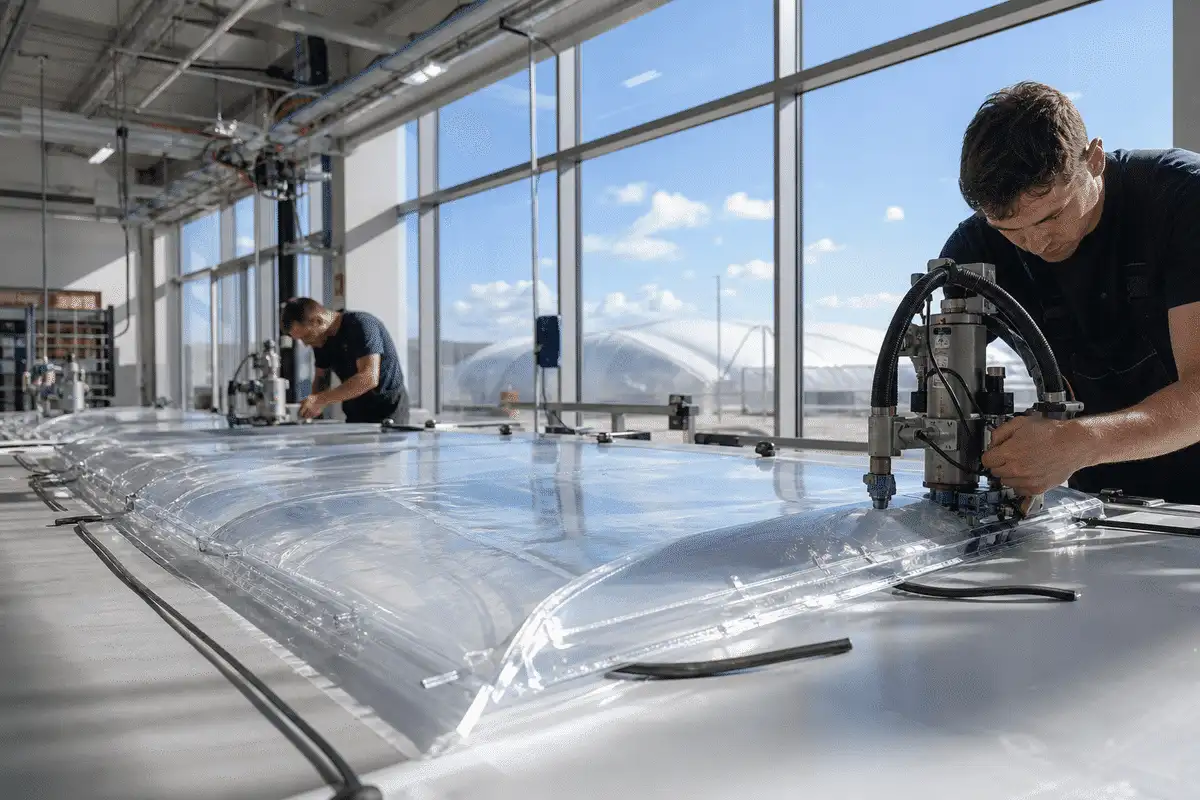
Engineering notes should document pressure setpoints, redundancy, fall-arrest strategy and cleaners access — tailored to the project, not generic claims.
Best practice is early coordination of structure, waterproofing and logistics so ETFE arrives when the grid is ready and weather windows are realistic.
Care
ETFE surfaces shed dirt more readily than many façades, but inspection and cleaning protocols still protect long-term performance.
Inspect clamps, cushions, welds, drainage and inflation equipment on a planned cycle, especially after extreme weather.
Rain often assists cleaning; where pollution or bird soiling accumulates, use manufacturer-approved methods and safe access.
Punctures and local damage are assessed for patch, module replacement or system checks — access and spare strategy should be designed in.
Define seasonal inspection, inflation checks and cleaning frequency with the operator; coastal or industrial sites may need tighter intervals.
Compliance
Compliance is project- and jurisdiction-specific. AAKS supports documentation against applicable codes without publishing unverified generic ratings.
ETFE is typically described as self-extinguishing and low-smoke in many assemblies, but publish only tested system ratings for your jurisdiction — never generic unverified labels.
ETFE offers excellent UV resistance and does not yellow like many plastics; optical clarity is retained over long outdoor exposure when detailed correctly.
Excellent resistance to rain, snow, humidity, storms and temperature extremes — still design for site wind, snow drift and drainage.
Daylighting can reduce artificial lighting demand; lighter structures may reduce material intensity. Whole-life benefits should be assessed inside the project sustainability framework.
Compare
Educational comparison of typical envelope options. Exact performance remains project-specific.
| Criteria | ETFE film / cushion | Glass |
|---|---|---|
| Weight | Very lightweight (~1% of glass by weight class) | Heavy; drives structure size |
| Daylight | Up to ~95% transmission possible | Typically high, but heavier build-ups |
| Form freedom | Curved and freeform friendly | Limited by weight and panelisation |
| Maintenance | Self-cleaning tendency; lower wash cycles | Regular cleaning usually required |
| Impact behaviour | Flexible; less brittle shatter risk | Strong but can shatter |
| Structure cost tendency | Often less primary steel demand | Higher structural support demand |
Products
Link only to live product pages that apply to this topic.
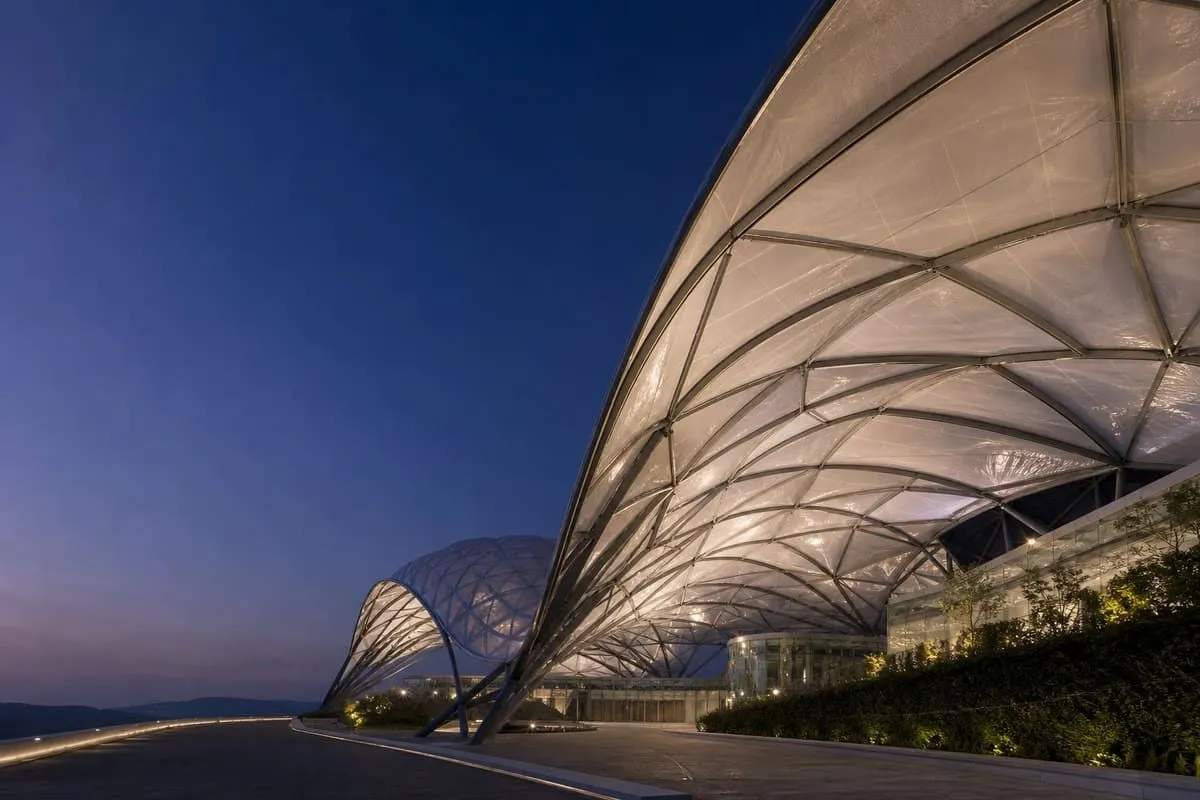
The membrane foundation for transparent and translucent architectural systems.
View product →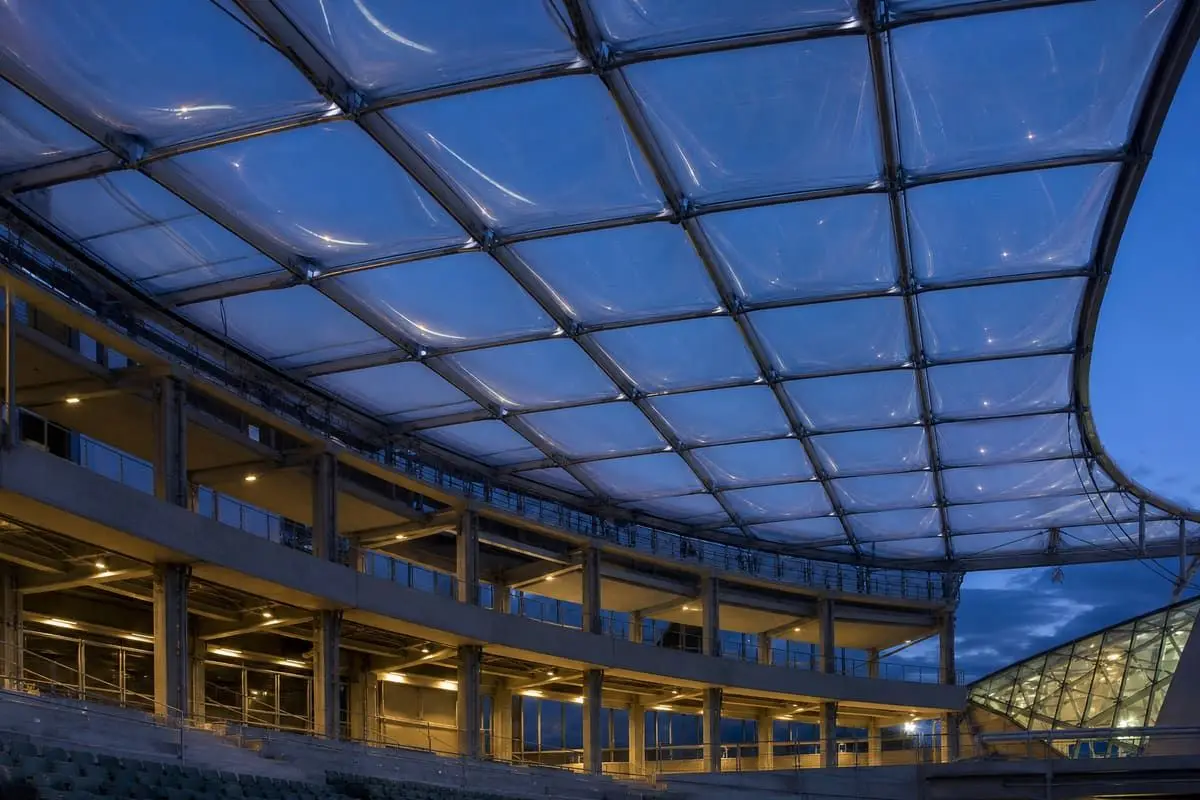
Multi-layer insulated cushions for luminous large-span roofs.
View product →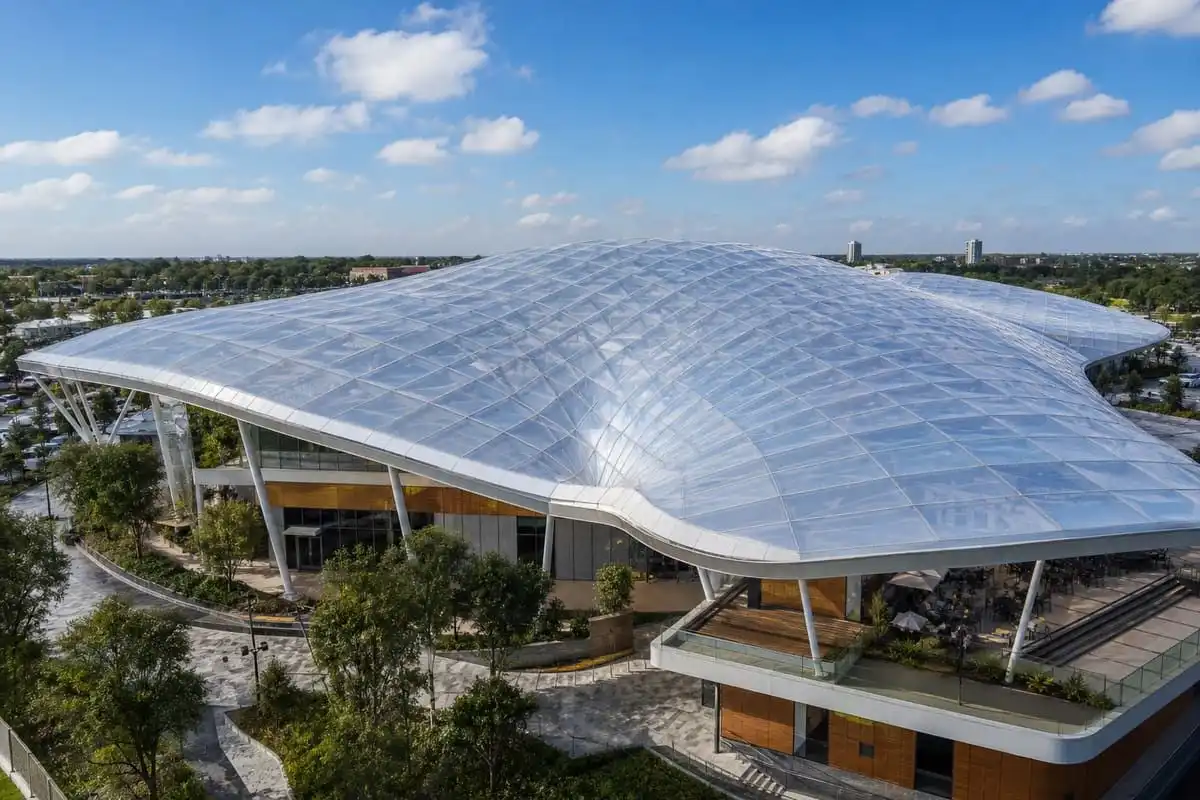
Integrated large-span roof packages coordinating structure and membrane.
View product →Sectors
Map to sector clusters in knowledge/INTERNAL_LINKING_RULES.md.
Case studies
Library
Sibling guides — replace tokens with live article paths when published.
Visuals
Unique visuals for this article only — do not reuse across pages.
FAQ
Align answers with knowledge/FAQ.md and topic knowledge files.
ETFE (Ethylene Tetrafluoroethylene) is a high-performance fluoropolymer film used for lightweight, durable, highly transparent or translucent roofs, façades, skylights and canopies.
ETFE is typically far lighter, can transmit more daylight, and supports freeform geometry with less structural mass. Glass remains preferred where absolute rigidity, certain acoustic targets or specific code assemblies are required.
A multi-layer ETFE assembly inflated with low-pressure air. Air cavities improve stiffness and thermal layering while keeping the roof luminous and lightweight.
Its smooth, low-energy surface helps rain wash deposits away, but inspection and cleaning are still recommended based on site pollution and access.
Architectural ETFE is known for strong UV and weather resistance, with typical service-life guidance of about 25–35+ years depending on design, environment, detailing and maintenance.
Fire performance depends on the tested system assembly and local codes. Design to applicable requirements and use certified system data — do not rely on generic film claims.
Yes — when engineered for the site. Wind pressures, snow drift and drainage are core design inputs for every AAKS ETFE system.
Architectural films are commonly selected in ranges such as about 100–300 micrometres per layer depending on application. Exact gauges follow system design and manufacturer guidance.
Stadiums, airports, shopping malls, exhibition centres, botanical gardens, transport hubs and modern commercial buildings are common candidates.
No. AAKS Architecture provides engineering, design, manufacturing, supply and installation for ETFE systems including cushions, roofs, façades, skylights, canopies and greenhouses.
Share drawings and performance priorities via contact-us.html, email info@aaksarchitecture.com, or call +91-9810882452.
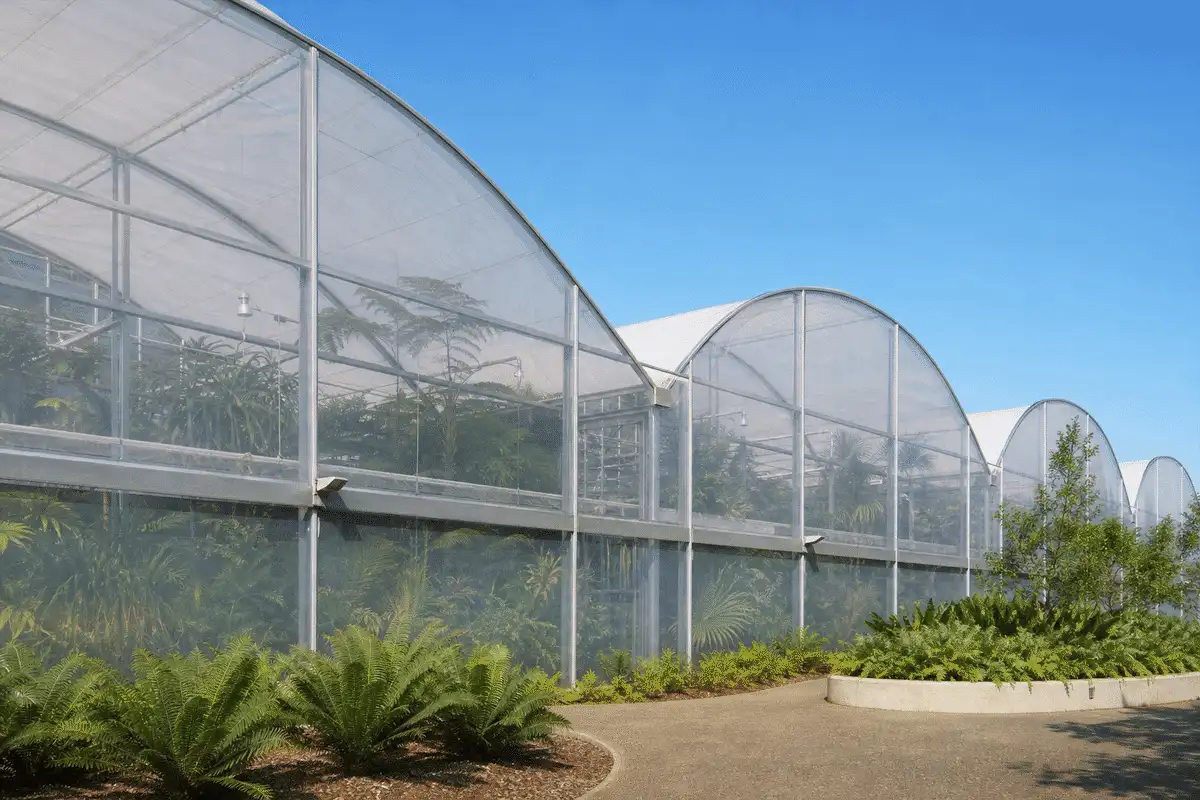
Yes. High light and UV transmission make ETFE attractive for horticultural envelopes when climate control, structure and detailing are engineered for the crop and site.
From film selection to engineered air cushion roofs, AAKS Architecture delivers design, supply and installation support for India and international projects.