
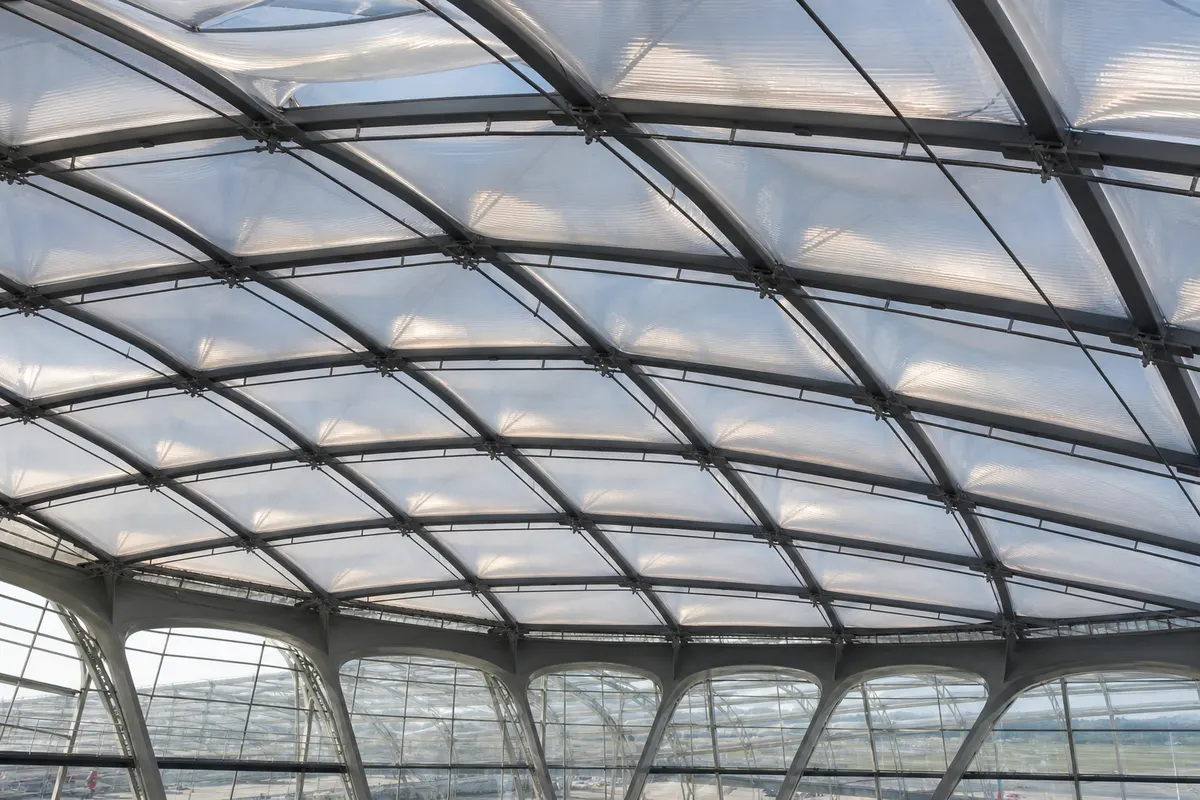
ETFE Air Cushion Roof

Insulated Multi-Layer Roofs for Large-Span Architecture

Insulated, low-pressure inflated ETFE cushions engineered for airports, stadiums, atria and other large-span roofs — combining a luminous, lightweight envelope with meaningfully better thermal performance than single-layer foil. AAKS Architecture designs, supplies, installs and commissions complete ETFE air cushion roof systems, including inflation units, controls and redundancy, for infrastructure and commercial projects across India.

Multi-Layer Insulated Cushions
Monitored Inflation Systems
Large-Span Engineered Daylight
Design–Install Turnkey Delivery

Overview

What is an ETFE Air Cushion Roof?

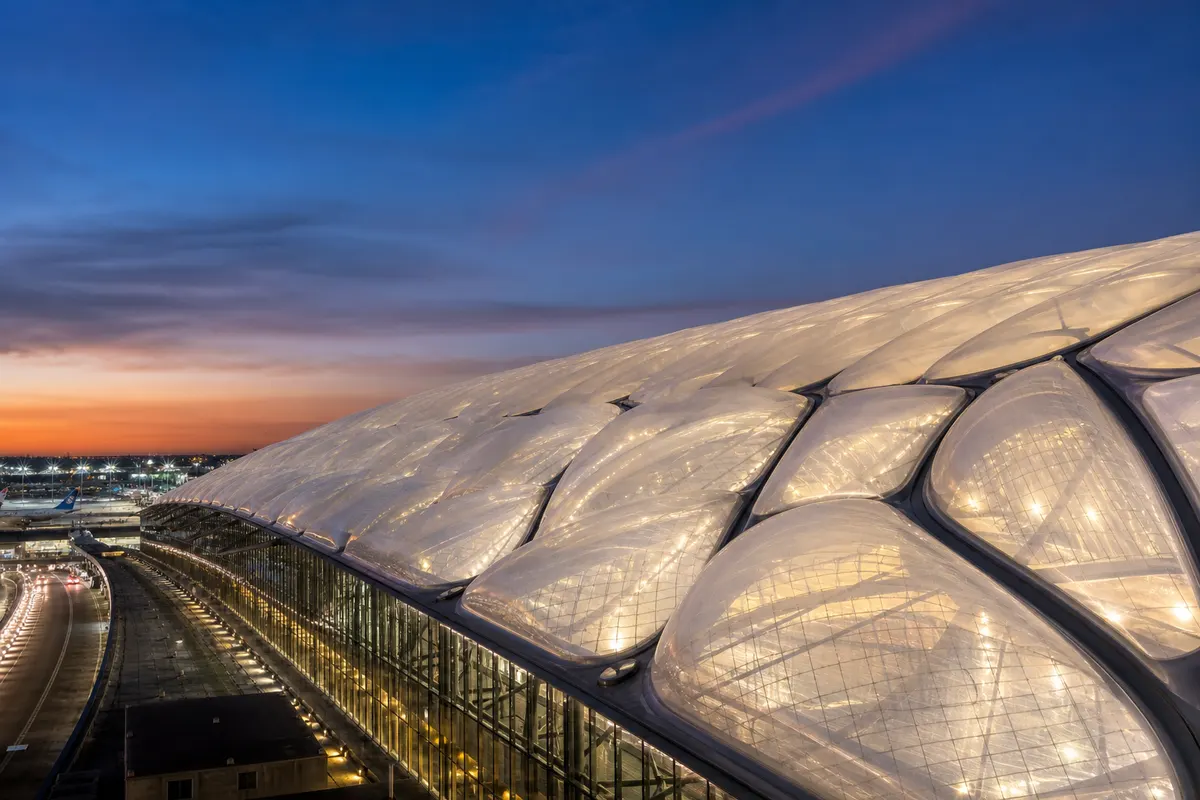
An ETFE air cushion — also called an ETFE pillow or pneumatic cushion — is a multi-layer ETFE assembly sealed at its edges and continuously or intermittently inflated with low-pressure air. The sealed air cavity gives the cushion its structural stiffness, improves thermal insulation compared with single-layer foil, and creates a luminous, lightweight roof or façade module. Air cushion systems are a flagship AAKS solution for airports, stadiums, atria and large commercial roofs.

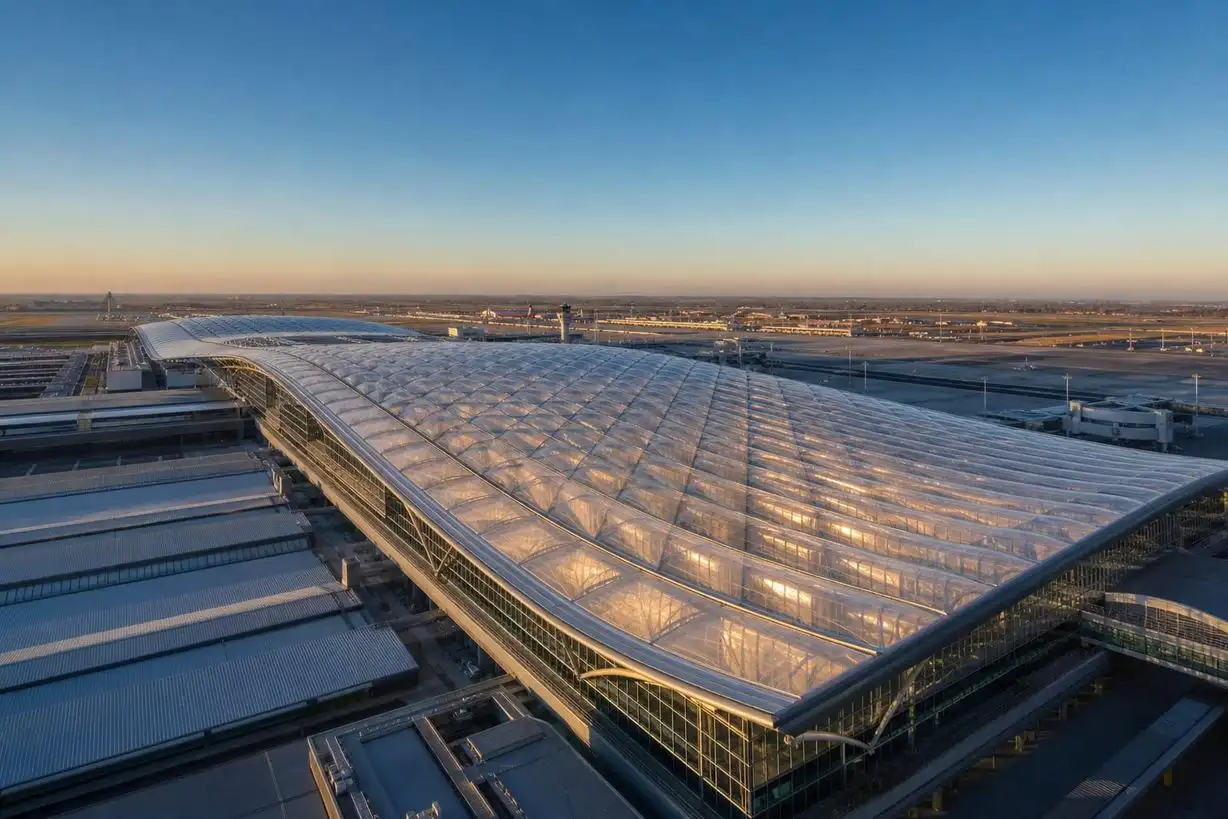
Airport terminal interior under a luminous multi-layer ETFE air cushion roof
Pneumatic roof module Multi-layer ETFE air cushions — daylight with insulation

Rather than a single tensioned skin, an ETFE cushion roof is built from two, three or four-to-five foils welded around their perimeter and inflated to a design pressure by a dedicated blower system. The air cavities between layers act as an insulating buffer, add stiffness to the module, and allow print or frit patterns on individual layers for solar control without sacrificing lightness.

AAKS Architecture engineers, fabricates and installs cushion roofs matched to each project’s daylight, thermal and structural brief.

2–5 Layers Insulated cushions
Monitored Inflation control
Large-Span Engineered daylight
Turnkey Design–install

Typical applications

  • Airport terminal roofs
  • Stadium & arena roofs
  • Mall & atrium fields
  • Convention centres
  • Pools & transit halls

Engineering benefits

  • Better thermal performance than single-layer ETFE
  • Modular roof fields with consistent luminous quality
  • Monitored inflation with pressure redundancy
  • Very low self-weight for ambitious spans

How Air Cushion Technology Works

Every ETFE air cushion roof follows the same underlying logic. Foils are digitally patterned, precision-welded and assembled into sealed cushion modules in a controlled fabrication environment. Once installed onto the primary structural grid, each cushion is inflated with low-pressure air to its design pressure, at which point the taut, pressurised skin behaves as a stiff structural panel rather than a loose membrane. Sensors then maintain that pressure within its operating range around the clock, so the roof continues delivering daylight, weather protection and thermal performance exactly as engineered.

This is fundamentally different from a single tensioned film layer: the inflated air cavity itself becomes part of the structural and thermal system, not just a gap between weathering skins. For architects and engineers evaluating a pneumatic roof or inflatable roof concept, understanding this behaviour is the starting point for every subsequent decision about layer count, cushion geometry and inflation strategy.
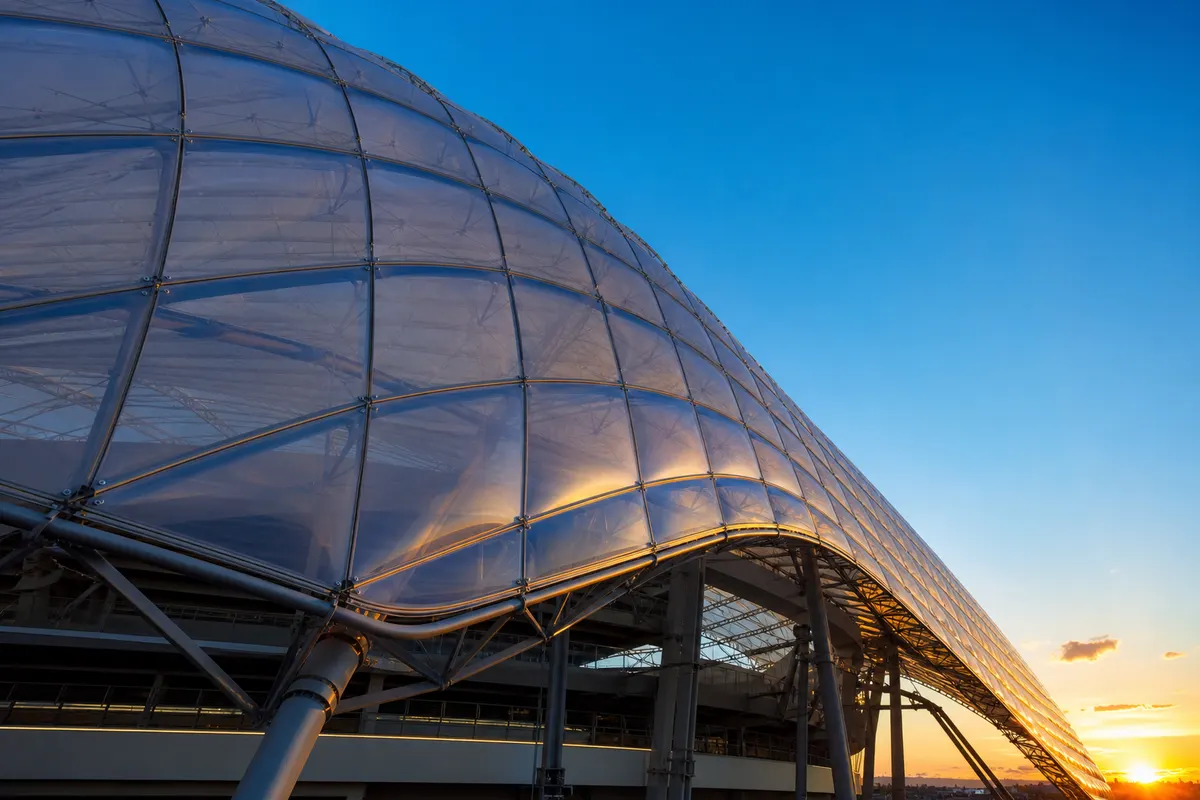
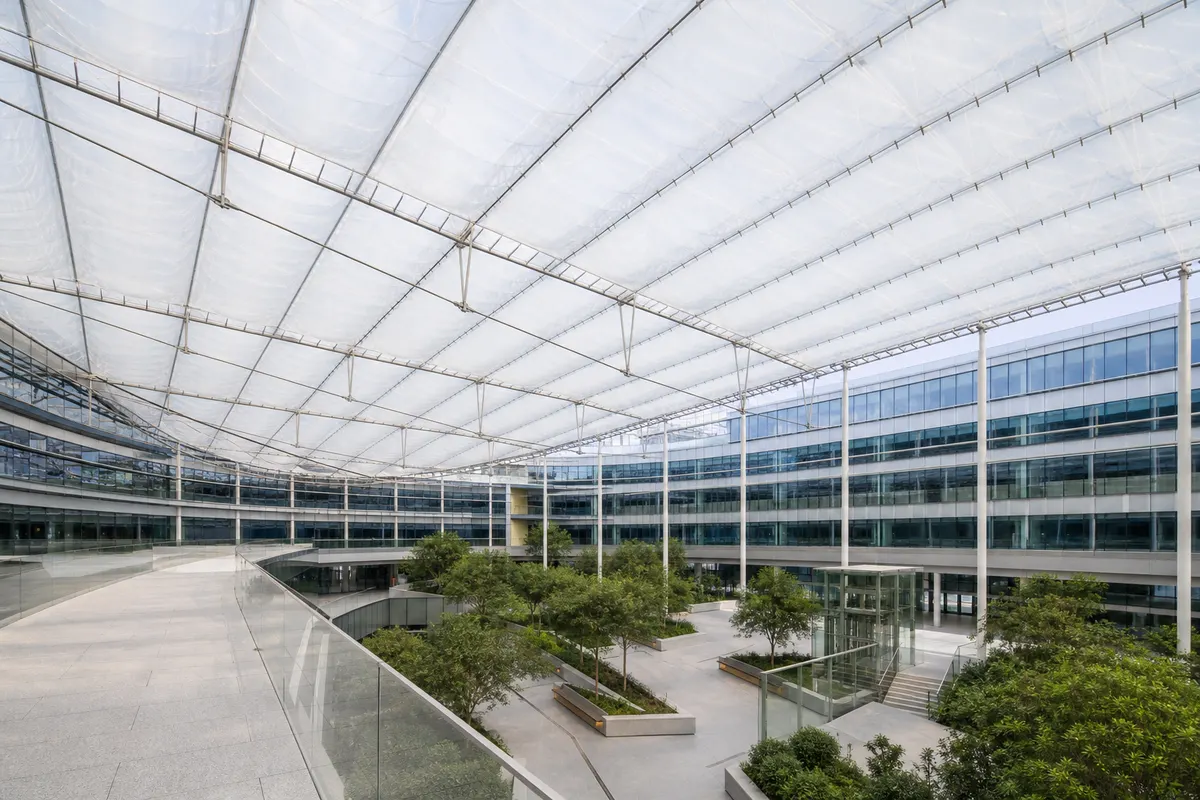
Multi-layer ETFE cushion module showing inflated air cavity between foils

Air Inflation System, Pressure Control & Blower Units

Behind every ETFE air cushion roof sits an inflation system that most visitors never notice: fans, ducting, valves and a network of pressure sensors that keep each cushion within its design range. Low-pressure blower units feed conditioned air continuously or intermittently into the cushion cavities, while control logic monitors pressure across the roof field and adjusts output as temperature, wind and solar loading change through the day.

Because reliable inflation is essential to the roof's structural and weathering performance, AAKS designs these systems with redundancy in mind — commonly dual fans and, where the project brief calls for it, backup power provision — so a single component fault does not compromise the envelope. Alarm logic flags pressure deviations early, giving facility teams time to respond well before performance is affected.

ETFE cushion roof blower and inflation unit with ducting and pressure controls

Multi-Layer Cushion Technology — 2, 3 & 4–5 Layer Systems

Not every project needs the same cushion build-up, and AAKS reviews span, climate, budget and performance targets before recommending one. A two-layer cushion is often the entry-level insulated configuration, pairing good daylight with moderate thermal improvement over single-layer film — a sensible fit for lighter canopies and transitional spaces. Three-layer cushions are the common performance balance for occupied buildings, combining an outer weathering foil, a middle foil and an inner layer to noticeably lift insulation and acoustic comfort. Four-to-five-layer cushions push thermal performance further still, at the cost of more cavities and more specialist design coordination — typically reserved for demanding climate or energy targets.

Exact U-values, gauges and print densities are project-specific and depend on verified system data, so AAKS confirms these figures during engineering rather than publishing a single number for every double or triple layer roof.

Diagram of two, three and four to five layer ETFE air cushion system configurations

Thermal Insulation & Light Transmission

The insulating air cavity is the defining advantage of a cushion roof over a single membrane layer. Thermal insulation performance scales with layer count — single-layer film offers basic insulation, double-layer cushions deliver good performance, and triple-layer configurations move into excellent territory — translating into lower heating and cooling costs and a more stable indoor environment across seasons.

At the same time, a transparent ETFE roof does not have to trade daylight for insulation: ETFE film transmits up to 95% of natural light, and print or frit patterns can be applied to individual cushion layers to manage solar heat gain and glare without materially darkening the interior. This combination of high daylight and improved insulation is precisely why airports, stadiums and atria specify cushion roofs over simpler single-layer alternatives.

Daylit airport concourse beneath a translucent multi-layer ETFE cushion roof

Weather, Wind & Snow Load Performance

ETFE cushion systems are engineered against the same forces as any primary roof: wind, rain, snow, humidity and temperature extremes. Cushion geometry and inflation pressure are sized together with the supporting structure for local wind and snow demand — with wind resistance capable of being engineered for speeds exceeding 200 km/h depending on the structural design and site-specific engineering calculations. On low-slope cushion roofs, drainage and ponding control are equally critical design inputs, addressed through cushion camber, gutter capacity and detailing rather than left to chance.

Snow load resistance benefits from the same air pressure system that gives cushions their stiffness: maintaining design pressure helps the roof hold its shape and shed load under accumulation, within the limits set by the project's structural engineering.

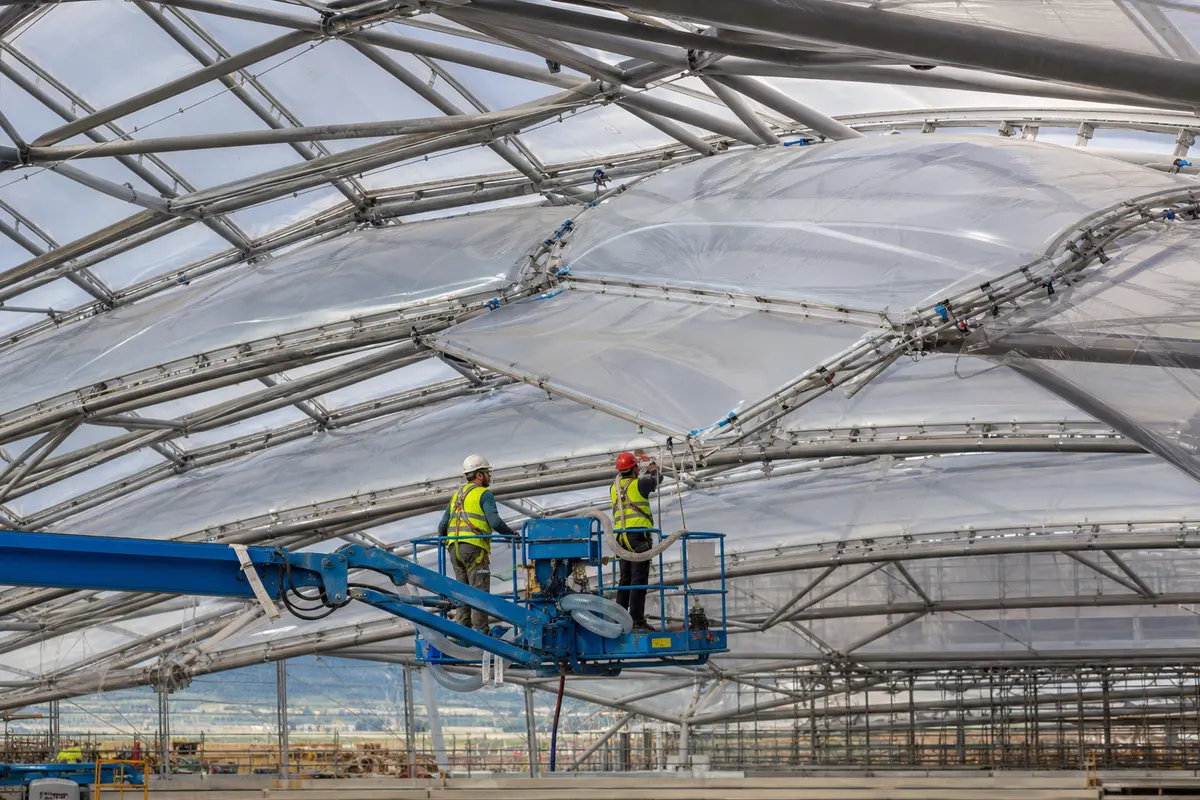
ETFE air cushion roof modules under installation on a large-span steel structure

Engineering Advantages & Structural Performance

Because ETFE cushion roofs weigh a fraction of an equivalent glass roof, they let architects and structural engineers specify lighter primary steel, cable nets or arches and smaller foundations — directly reducing construction cost and, in seismic regions, benefiting from the lower mass the envelope adds to the building. The cushion's soft, pressurised structural behaviour under extreme events is a further point of interest for engineers, though this is always design-dependent and confirmed through project-specific calculation rather than treated as an automatic property of the material.

Redundancy is engineered into the system as standard practice: dual inflation fans, backup power where specified, and pressure monitoring with alarm logic all contribute to a resilient, low-maintenance roof once commissioned. AAKS coordinates this engineering directly with architects, structural consultants and façade engineers from concept through construction.

Structural steel grid supporting an ETFE air cushion roof during construction

Architects

Architects specify air cushion roofs for their luminous quality, large modular fields and freedom to introduce print or frit patterns without a weight penalty. AAKS supports early daylight studies, geometry options and detailing coordination.

Structural Consultants

Structural engineers rely on documented cushion behaviour, wind and snow load inputs and inflation system schematics to specify with confidence. AAKS provides engineering support and load coordination from concept through construction.

Airport, Metro & Infrastructure Developers

Airports, metro stations and transit authorities need durable, insulated, large-span daylighting for busy public concourses. Multi-layer cushions deliver that performance within a lightweight, low-maintenance envelope.

Stadium Designers

Stadium and arena roofs use cushion fields to span vast column-free distances while improving acoustic comfort and thermal stability for spectators and events beneath the canopy.

Commercial Developers

Malls, convention centres and mixed-use developments value the iconic look of a cushion roof alongside genuine energy and maintenance savings versus a comparable glazed atrium.

Government & Public Infrastructure

Public infrastructure clients benefit from a turnkey design–supply–install partner, monitored inflation systems and redundancy planning suited to high-occupancy civic buildings.

Note: Values referenced across this page are typical / manufacturer-dependent figures from AAKS technical knowledge documentation. Exact U-values, thicknesses, print densities and fire ratings are project-specific — always confirm project data sheets and engineering calculations before finalising specifications.

Capabilities

Key Features

Engineering-led advantages of ETFE air cushion roofing for modern architecture.

Modular Cushion Construction

Large roofs are built from independently fabricated, inflated cushion modules — simplifying transport, phased installation and future module-level replacement.

Superior Thermal Insulation

Insulation performance scales with layer count — double and triple-layer cushions meaningfully outperform single-layer foil for heating and cooling comfort.

Monitored Inflation Systems

Pressure sensors and control logic keep every cushion within its design range around the clock, flagging deviations before performance is affected.

Engineered Redundancy

Dual fans, alarm logic and backup power provision — where specified — protect roof performance against single component faults.

Frit & Solar Control Printing

Print or frit patterns applied to individual cushion layers manage solar heat gain and glare while preserving the roof's luminous character.

Very Low Self-Weight

Cushions weigh a fraction of an equivalent glass roof, enabling ambitious column-free spans with lighter primary structure and foundations.

Iconic Architectural Identity

Large, luminous cushion fields create a modern, international roofline that has become a signature of contemporary airport and stadium design.

Turnkey Design–Supply–Install

AAKS Architecture delivers engineering, fabrication, inflation systems, installation and commissioning as one accountable partner.

Engineering Data

Technical Specifications

System components and typical film properties. Confirm project-specific data sheets before specification.

Parameter Typical Value / Description
System Type Multi-layer ETFE cushion, sealed at edges, low-pressure inflated
Layer Configuration 2-layer (entry insulated) / 3-layer (performance balance) / 4–5 layer (higher thermal, specialist design) — project-specific
Film Material ETFE (Ethylene Tetrafluoroethylene)
Film Density 1.70–1.75 g/cm³
Typical Film Weight (per layer) 0.3–1.0 kg/m² (vs 25–30 kg/m² for glass)
Light Transmission Up to 95% (system value depends on layer count and print/frit density)
Service Life 25–35+ years, project-specific
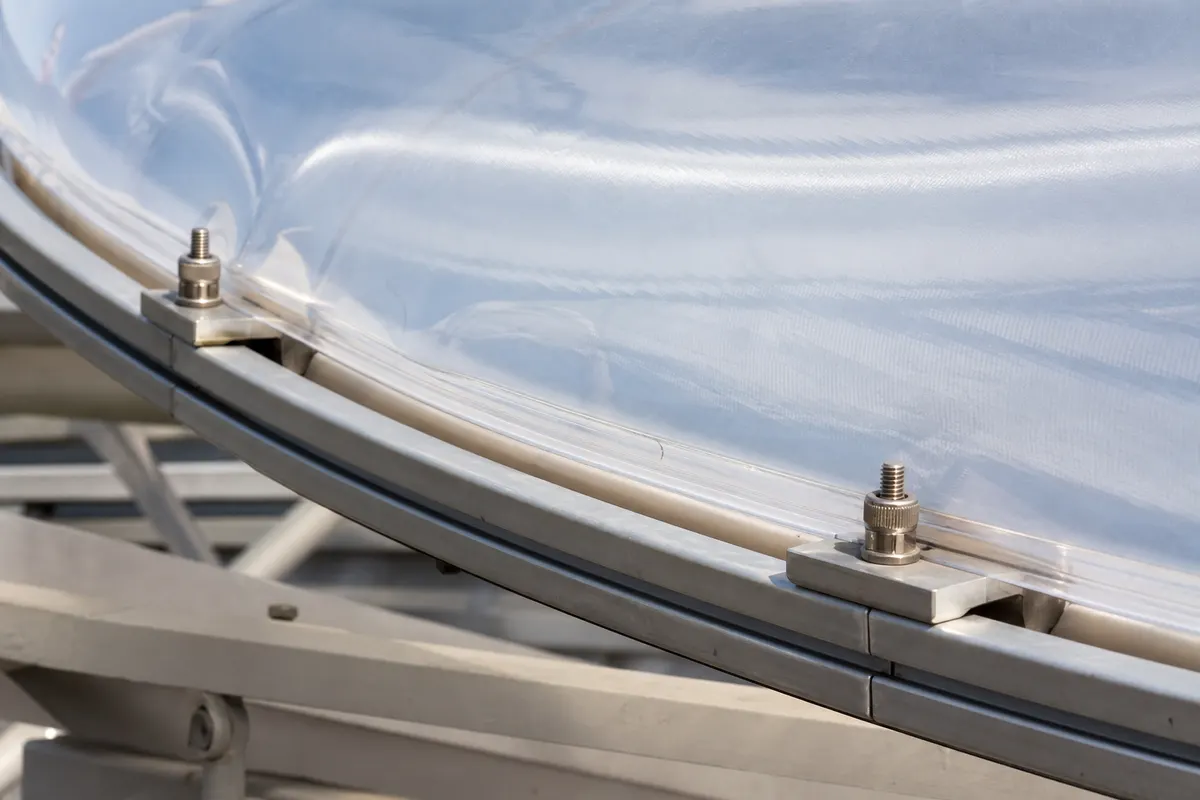
Edge Detailing Aluminium clamps, keder or extruded frames
Primary Structure Steel or aluminium grids, arches, cable nets
Inflation System Low-pressure fans, ducts, valves
Controls & Sensors Pressure monitoring with redundancy logic and alarms
Fire Behaviour Self-extinguishing film; exact ratings are system- and jurisdiction-specific

Material Options

Available Thickness

Film gauges are selected per layer role, span and application — not thickness bravado.

Thickness Typical Cushion Roof Applications
150 Micron Lighter inner or middle cushion layers, interior cushions
200 Micron Double-layer cushion roofs, skylights
250 Micron Stadium roofs, airport roofs, large air cushion structures
300 Micron Heavy-duty outer weathering layers on large-span cushion roofs

Performance

Performance Characteristics

Built for demanding outdoor architecture and long service life.

Waterproof

Fully waterproof cushion skins prevent rainwater penetration, engineered for continuous outdoor exposure across large roof fields.

UV Resistant

Excellent UV stability keeps cushion foils clear rather than yellowing under prolonged sunlight, supporting a long outdoor service life.

Self-Cleaning

A smooth, low-surface-energy finish resists dust adhesion, so rainfall naturally washes the outer cushion layer and lowers maintenance cost.

Weather Resistant

Engineered against rain, snow, dust, storms, humidity and temperature extremes, validated through project-specific wind and snow load design.

Fire Behaviour

Self-extinguishing film that does not promote flame spread; exact fire ratings are system- and jurisdiction-specific, confirmed per project.

Impact Resistant

Flexible, tear-resistant foils offer meaningfully higher impact tolerance than glass, reducing the risk of cracking or shattering on impact.

Chemical Resistant

Highly resistant to acids, alkalis, salts, industrial chemicals and environmental pollutants — suited to industrial and coastal sites.

Energy & Thermal Efficiency

Multi-layer insulating cavities reduce heating and cooling loads while high daylight transmission cuts artificial lighting demand.

Sectors

Applications

Where ETFE air cushion roofing delivers architectural and operational value.

Why Choose This System

Advantages

Client outcomes that matter across design, construction and lifecycle cost.

01

Lower Structural & Foundation Load

Very low cushion self-weight lets engineers specify lighter steel, cable nets or arches and smaller foundations than an equivalent glass roof.

02

Superior Multi-Layer Thermal Performance

Insulating air cavities between foils meaningfully outperform single-layer film, cutting heating and cooling demand across the roof field.

03

Large-Span Daylight Without Glass Weight

Up to 95% light transmission delivers bright, naturally lit interiors across long-span roofs that would be structurally punishing in glass.

04

Monitored, Redundant Inflation

Pressure sensors, alarm logic and dual-fan redundancy keep cushions performing reliably with minimal facility-team intervention.

05

Iconic Architectural Identity

Large luminous cushion fields create a distinctive, modern roofline recognised at airports, stadiums and civic landmarks worldwide.

06

One Accountable Delivery Partner

AAKS Architecture manages engineering, fabrication, inflation systems, installation and commissioning end-to-end, reducing coordination risk.

Material Comparison

Compare with Alternatives

High-level comparison for early design decisions. Project engineering always governs.

Feature ETFE Cushion Glass Polycarbonate PVC PTFE
Weight ~0.3–1.0 kg/m² per layer (~99% lighter than glass) 25–30 kg/m² (heavy) Medium weight Medium-weight coated fabric Lightweight coated glass-fibre fabric
Thermal Insulation Basic (single layer) to excellent (triple layer cushions) Good (double/triple glazing) Good Limited insulating value Limited insulating value; different build-ups needed
Light Transmission Up to 95%, varies with layer count / print 80–90% 70–88% Lower long-term clarity; varies by grade Translucent; lower transparency than clear ETFE
Maintenance Self-cleaning film; inflation system needs periodic servicing Requires regular cleaning Requires periodic cleaning Periodic cleaning / recoating over time Low — durable coated fabric surface
Design Flexibility Modular cushion fields, curved geometries, print/frit control Limited by weight Curved but limited span Flexible fabric forms and tensile shapes Flexible fabric forms; different aesthetic to clear film
Service Life 25–35+ years, project-specific 30–50 years 10–20 years Typically shorter than ETFE membranes Comparable long-term durability, different optical character

Delivery

Construction & Installation Process

From concept engineering to commissioned, inflated installation — one accountable partner.

  1. 1

    Discover

    Brief, site constraints and performance goals.

  2. 2

    Concept

    Geometry, cushion layer strategy, daylight and thermal intent.

  3. 3

    Engineer

    Wind/snow load cases, foil patterning and inflation system schematic.

  4. 4

    Fabricate

    Precision cutting, welding, cushion assembly and factory QA.

  5. 5

    Install

    Module fixing, edge sealing and interface completion on site.

  6. 6

    Commission & Support

    Controlled inflation, sensor calibration, redundancy tests, handover and aftercare.

Construction crew installing ETFE air cushion roof modules on a steel primary structure

Media

Video Gallery

Poster-first playback of ETFE air cushion explainers, installation and project footage.

Overview of ETFE air cushion technology, inflation systems and performance
Fabrication, module installation and inflation commissioning on site
An ETFE air cushion roof installed on a large-span infrastructure project

Support

Frequently Asked Questions

Answers drawn from AAKS Architecture technical documentation.

What is an ETFE air cushion roof?

An ETFE air cushion (also called an ETFE pillow or pneumatic cushion) is a multi-layer ETFE assembly sealed at the edges and continuously or intermittently inflated with low-pressure air. The air cavity adds structural stiffness, improves thermal insulation compared with single-layer foil, and creates a luminous, lightweight roof or façade module for airports, stadiums, atria and large commercial roofs.

Single-layer film or air cushion roof — which do I need?

Single-layer ETFE suits many canopies and lightweight, unoccupied roofs. Air cushions are preferred when insulation, larger modular roof fields, acoustic damping or higher overall envelope performance are required — such as occupied stadium roofs, airport terminals and insulated atria. AAKS advises after reviewing spans, climate and performance targets for your project.

What happens if an ETFE cushion is punctured?

Many punctures can be assessed and repaired, or individual modules replaced, following defined maintenance protocols. Because a cushion roof is built from many independent inflated modules rather than one continuous skin, a single puncture is typically a localised, manageable event. Good design includes access strategy and spare-module planning from the outset.

Do air cushion roofs need constant power to stay inflated?

Inflation units maintain each cushion at its design pressure and typically include pressure monitoring and redundancy such as dual fans or backup power, since low-pressure air supply is continuous by design. The exact power and redundancy strategy is defined during project engineering to suit the building's criticality and local grid reliability.

Can ETFE air cushion roofs withstand wind, rain and snow loads?

Yes, when engineered for the site. ETFE cushion systems can be designed to withstand high wind speeds, with cushion geometry, inflation pressure and the supporting structure sized for local wind and snow demand rather than treated as decorative detailing. Drainage and ponding control on low-slope cushion roofs are equally important design inputs.

How long does an ETFE air cushion roof last?

ETFE film is known for excellent UV and weather resistance, and cushion systems are engineered for decades of outdoor service. Actual lifespan depends on layer strategy, environment, detailing, inflation maintenance and access provisions, so AAKS provides project-specific guidance rather than a single blanket figure for every roof.

How long does air cushion roof installation take?

Programme depends on roof area, access, structural readiness and cushion layer configuration. Because cushions are prefabricated and quality-checked off-site, on-site work is largely focused on module installation, edge fixing, inflation and commissioning — often shorter than complex glazing sequences. AAKS confirms a project-specific schedule after briefing.

Do you supply ETFE air cushion systems only, or handle full design and installation?

Both. AAKS Architecture can supply engineered cushion systems and inflation equipment for your fabricator or contractor, or deliver a complete design, supply, installation and commissioning package as one accountable partner from concept through handover and aftercare.

Ready to Specify an ETFE Air Cushion Roof?

Whether you need engineered cushion systems for your contractor or a complete design–supply–install package, AAKS Architecture is ready to support your project.