
ETFE Film

ETFE Film — High-Performance Architectural Membrane

A high-performance fluoropolymer membrane engineered for large-span roofs, façades and greenhouses — delivering up to 95% natural light transmission at a fraction of the weight of glass. AAKS Architecture designs, supplies and installs transparent ETFE film systems for airports, stadiums, malls and infrastructure projects across India.

Up to 95% Light Transmission
25–35+ Yrs Service Life
~99% Lighter Than Glass
0.3–1.0 kg/m² Film Weight

Overview

What is ETFE Film?

ETFE (Ethylene Tetrafluoroethylene) is a high-performance fluoropolymer film widely used in modern architecture, construction, solar energy, greenhouses and industrial applications — a lightweight, advanced alternative to glass with up to 95% light transmission and a service life of 25–35+ years.

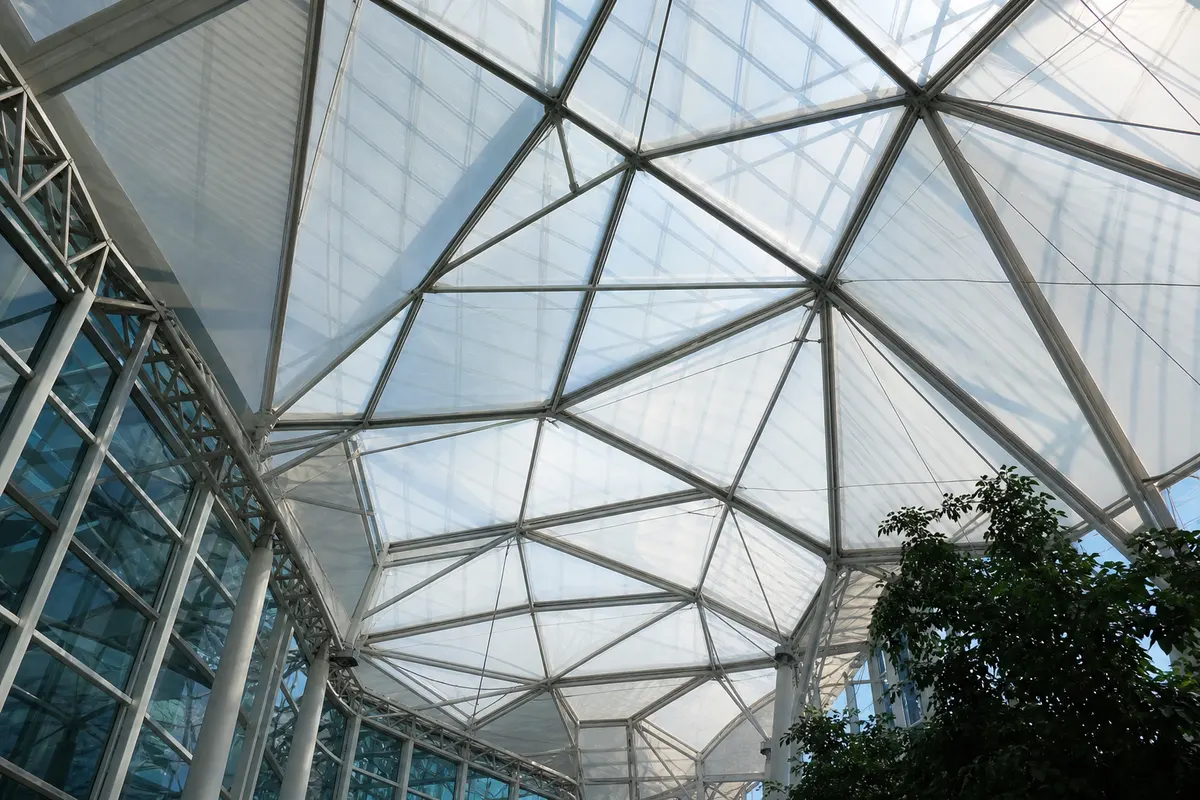
Daylit atrium under a translucent ETFE film roof with modern steel framing
Architectural membrane Transparent ETFE film — daylight without glass weight

ETFE film’s advanced surface technology is dust-proof, waterproof, self-cleaning and scratch-resistant — letting maximum daylight in while cutting maintenance. Flexible, energy-efficient and proven in harsh climates, it is the preferred membrane for stadiums, airports, malls, exhibition centres, botanical gardens and modern commercial buildings worldwide.

AAKS Architecture sources, fabricates and installs transparent, translucent and printed ETFE film to match each project’s daylight, thermal and aesthetic brief.

Up to 95% Light transmission
~99% Lighter than glass
25–35+ Years service life
0.3–1.0 kg/m² film weight

Typical applications

  • Stadium & arena roofs
  • Airport terminals & canopies
  • Mall & atrium skylights
  • Exhibition centres
  • Botanical gardens

Engineering benefits

  • High daylight cuts artificial lighting loads
  • Ultra-light membrane reduces steel & foundations
  • Self-cleaning surface lowers maintenance
  • Excellent UV stability across decades

What Makes ETFE Film Different

Ethylene Tetrafluoroethylene, better known simply as ETFE, belongs to the fluoropolymer family of engineered plastics — the same chemical lineage that gives non-stick cookware its legendary surface performance. In architectural form, ETFE is drawn into thin, optically clear film and welded into single-layer membranes or multi-layer air cushions. Unlike glass, which relies on mass and rigidity to resist load, ETFE performs through tension, flexibility and internal air pressure — a fundamentally different structural logic that unlocks lighter buildings, longer spans and more expressive geometry.

For architects and engineers researching ETFE film supplier and manufacturer options in India, the material's appeal comes down to a rare combination: near-glass transparency at roughly one percent of the weight, decades of proven outdoor durability, and a self-cleaning surface that keeps maintenance budgets low. AAKS Architecture supplies transparent ETFE film, printed and fritted variants, and complete cushion systems engineered for the Indian climate — from monsoon rainfall to high summer UV loads.
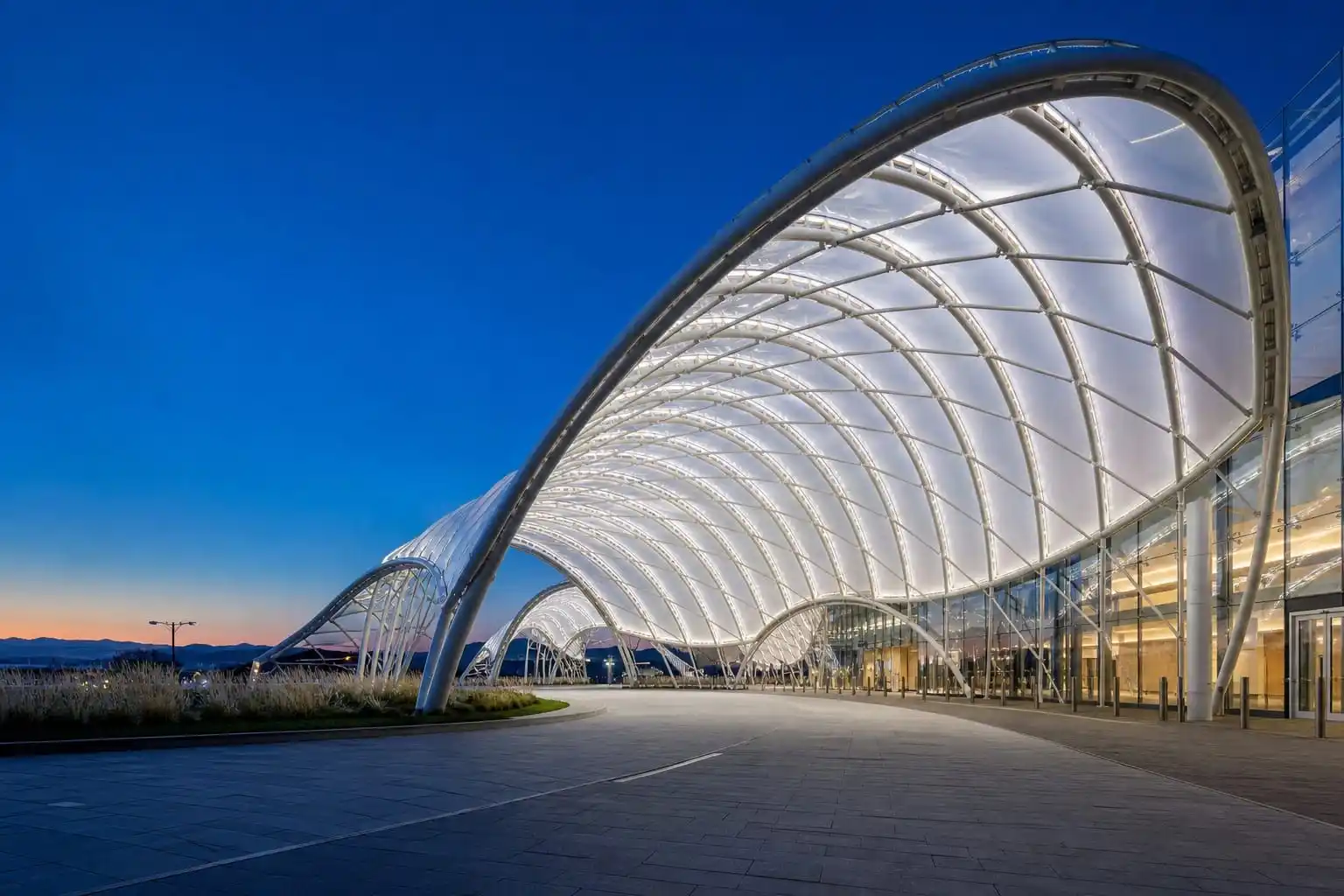
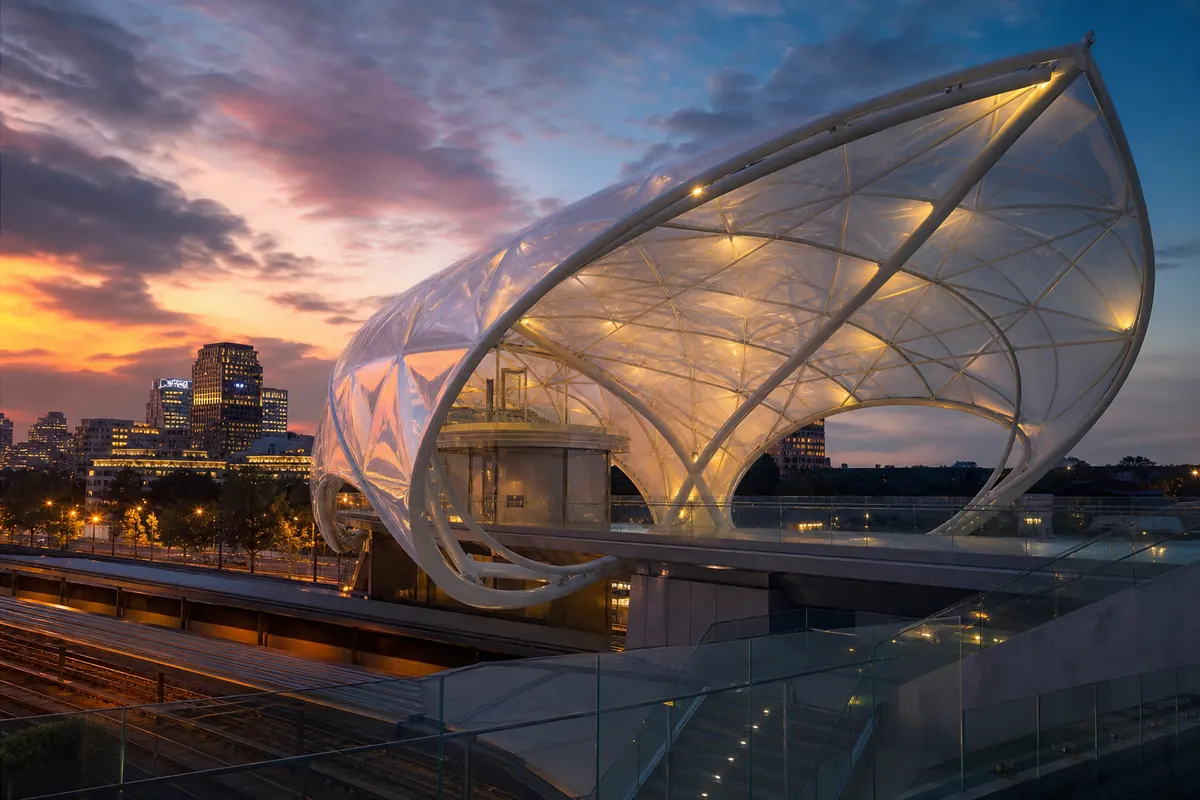
Curved translucent ETFE film canopy glowing at dusk

How ETFE Film Is Fabricated and Engineered

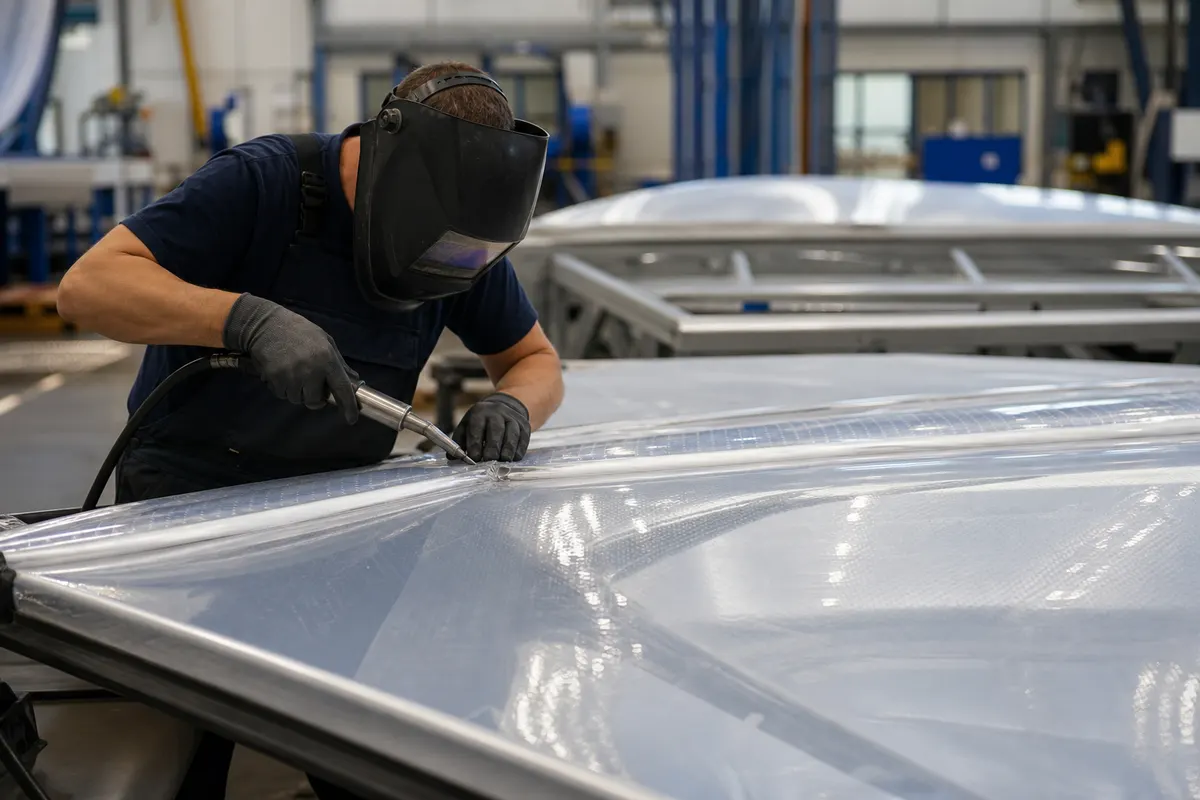
Every ETFE film project begins with the same question: what should the membrane do — admit maximum daylight, filter solar heat, insulate a roof cavity, or simply shelter a walkway? The answer shapes everything downstream: film grade and thickness, single-layer or cushion configuration, and how panels are patterned, welded and clamped into the primary structure. AAKS engineers pattern each membrane digitally before CNC cutting and precision welding in a controlled fabrication environment, ensuring consistent seam strength and dimensional accuracy across every module.

Because ETFE film is supplied in rolls of controlled width and gauge, large roofs and façades are built up from many individually engineered panels rather than cast as one piece. This modularity is an advantage for logistics, transport and phased installation, and it also means damaged sections can be identified and replaced without disturbing the entire envelope — a practical benefit for facility managers across a 25–35+ year service life.

Precision welding and fabrication of translucent ETFE film panels

Where Transparent ETFE Film Performs Best

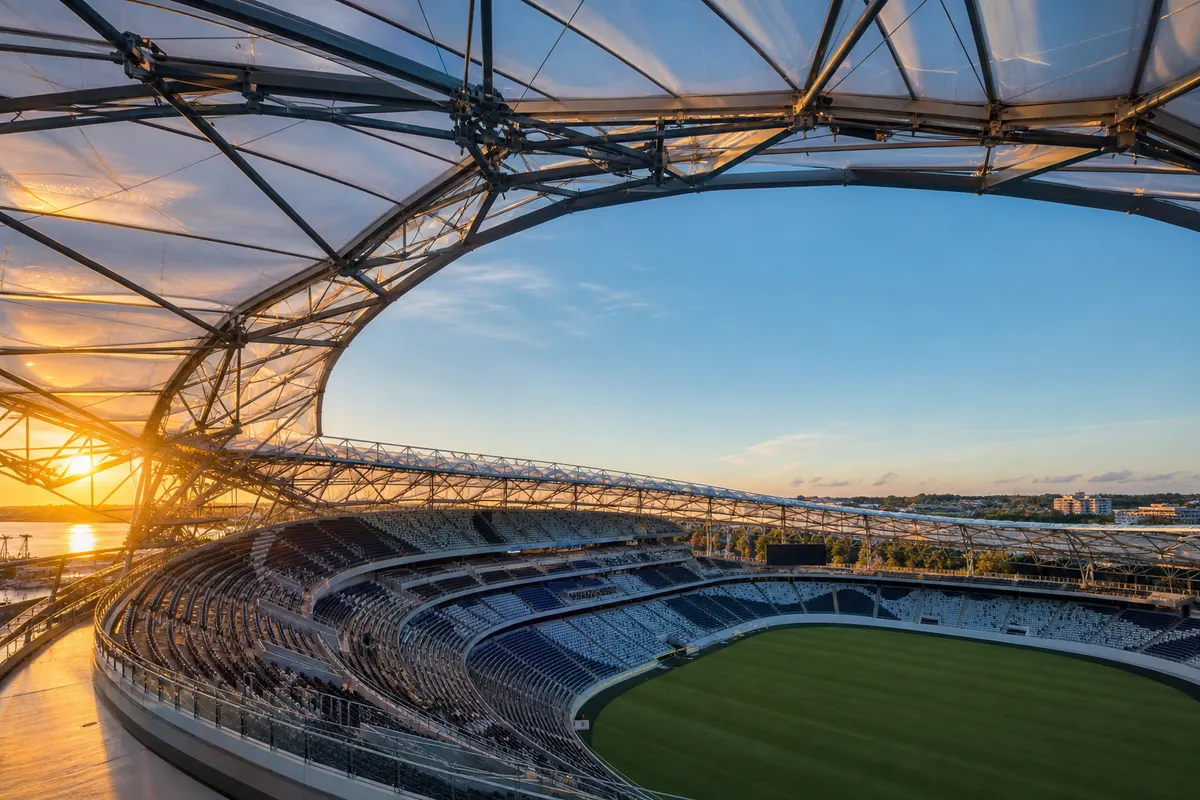
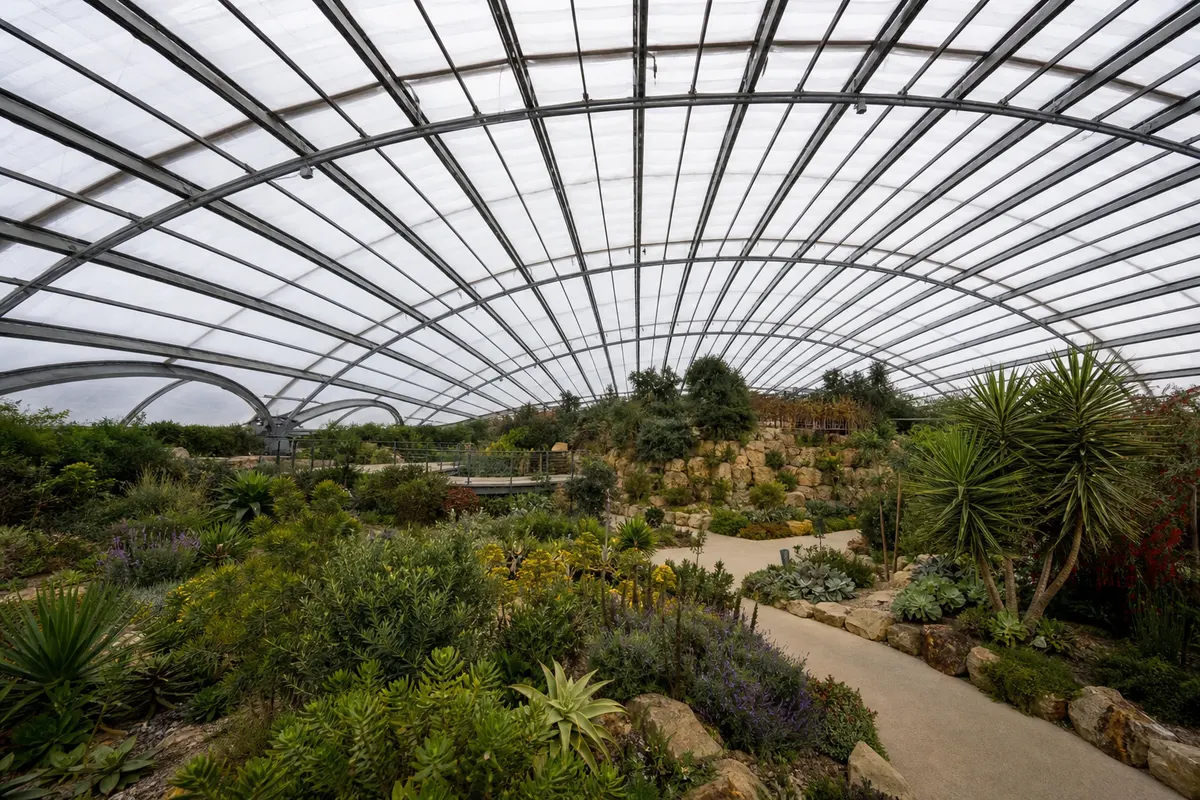
ETFE film earns its place on demanding, large-span projects where glass becomes structurally punishing and polycarbonate cannot match the optical clarity or lifespan required. Airports and metro stations use it to flood concourses with daylight without loading the roof structure. Stadiums and arenas span vast column-free distances with tensioned or cushion membranes that shrug off wind and rain. Shopping malls and atria rely on ETFE skylights for a luminous, energy-conscious retail experience, while botanical gardens and commercial greenhouses depend on its 90–95% UV transmission to support healthy plant growth. Exhibition centres, transport hubs and modern commercial buildings round out a client list that spans public infrastructure and private development alike.

Large-span ETFE cushion roof flooding an interior with soft daylight

Film, Cushion or Façade — Choosing the Right ETFE System

Not every project needs the same ETFE build-up. A single tensioned film layer is often the right specification for canopies, walkway covers and lightweight roofs where thermal insulation is a secondary concern. Multi-layer air cushions — two, three or four layers of film inflated with a low-pressure blower system — trade a small amount of complexity for meaningfully better thermal performance, acoustic damping and structural stiffness, making them the preferred choice for occupied stadium roofs, airport terminals and insulated façades. AAKS reviews span, climate, budget and performance targets with each client before recommending a system, rather than defaulting to a single configuration.

Airport terminal interior under a luminous ETFE film roof

Supply, Fabrication and Installation Across India

As an ETFE film manufacturer and supplier based in New Delhi, AAKS Architecture delivers both supply-only film rolls for specialist fabricators and complete design-supply-install packages for architects, EPC contractors and developers who want one accountable partner. Every quotation is engineered against project drawings and performance requirements rather than issued as a generic price list, because gauge, layer count, frit pattern and support structure all affect the true cost per square metre. Teams researching ETFE film price, planning to buy ETFE film for an upcoming tender, or sourcing an ETFE film roll for fabrication are encouraged to share drawings and performance requirements for an accurate, project-specific quotation.

Because installation is largely factory-prefabricated, on-site programmes are typically shorter and less weather-dependent than complex glazing works. Modules arrive pre-welded and quality-checked, so site crews focus on setting out, tensioning or inflating, and sealing interfaces with the primary structure — an approach that suits both new-build infrastructure schedules and retrofit projects with limited shutdown windows.

ETFE film fabrication workshop with precision membrane panels

Sustainability and Lifecycle Value

Beyond daylight and weight savings, ETFE film supports genuinely lower lifecycle cost. A membrane roof that weighs roughly one percent of an equivalent glass roof directly reduces the embodied carbon of the supporting steel, cranage and foundations required to carry it. Over a 25–35+ year service life, the reduced need for artificial lighting, lower cleaning frequency and simpler component-level repairs — rather than full panel replacement — combine to keep operating costs meaningfully below conventional glazed envelopes. For clients evaluating ETFE film against glass, polycarbonate, PVC or PTFE fabric on a total-cost-of-ownership basis, these compounding savings are often as decisive as the upfront material and installation price.

Retail atrium skylight built with transparent ETFE film cushions

Architects

Architects specify ETFE film for its transparency, weldable geometry and ability to realise curved, free-form roofs and façades without the weight penalty of glass. AAKS supports early-stage form-finding, daylight studies and detailing coordination.

EPC & Consultants

Structural engineers and façade consultants rely on documented physical properties, tensile data and fire behaviour to specify ETFE film with confidence. AAKS provides engineering support, load coordination and specification assistance from concept through construction.

Airport, Stadium & Infrastructure Developers

Airports, stadiums and transit authorities need durable, large-span daylighting solutions that reduce structural mass and long-term maintenance. ETFE film delivers 25–35+ year service life within a lightweight envelope suited to iconic public infrastructure.

Commercial Builders

Developers and contractors value ETFE film for faster installation, lower foundation loads and reduced lifecycle costs versus glazed alternatives — supporting tighter programmes and stronger project economics.

Note: Values referenced across this page are typical / manufacturer-dependent figures from AAKS technical knowledge documentation. Always confirm project-specific data sheets and engineering calculations before finalising specifications.

Capabilities

Key Features

Engineering-led advantages of ETFE film for modern architecture.

High Light Transmission

Transmits up to 95% of natural daylight, reducing dependence on artificial lighting while keeping interiors bright and visually connected to the sky.

Ultra-Lightweight Membrane

At roughly 0.3–1.0 kg/m², ETFE film is about 99% lighter than glass, cutting structural steel, foundation loads and construction cost.

Self-Cleaning Surface

A smooth, low-energy fluoropolymer surface resists dust and dirt adhesion, letting rainfall naturally rinse the membrane clean.

UV Stable & Long-Lasting

Outstanding UV resistance means the film does not yellow or embrittle, maintaining clarity and strength for 25–35+ years of service.

Design Flexibility

Flexible and weldable into curved, free-form and pneumatic cushion geometries — enabling architectural forms glass and rigid sheet cannot achieve.

Waterproof & Weather Resistant

Fully waterproof with excellent resistance to rain, snow, humidity and temperature extremes, engineered for continuous outdoor exposure.

Self-Extinguishing Fire Behaviour

A self-extinguishing material that does not promote flame spread, softening under heat to vent smoke rather than shatter like glass.

Fast, Precision Installation

Factory-fabricated modules and lightweight handling enable installation typically 3–5 times faster than comparable glass systems.

Engineering Data

Technical Specifications

Typical values for guidance. Confirm project-specific data sheets before specification.

Parameter Typical Value
Material ETFE (Ethylene Tetrafluoroethylene)
Density 1.70–1.75 g/cm³
Typical Film Weight 0.3–1.0 kg/m² (vs 25–30 kg/m² for glass)
Light Transmission Up to 95%
UV Transmission 90–95% (ideal for plant growth)
Tensile Strength 40–55 MPa (elongation at break ~300%)
Working Temperature Range -200°C to +150°C (melting point ~270°C)
Fire Behaviour Self-extinguishing; water absorption nearly zero

Material Options

Available Thickness

Select film gauges by layer role, span and application — not thickness bravado.

Thickness Typical Applications
50 Micron Solar panel front sheet, electronics, lamination
100 Micron Solar panels, greenhouses, industrial lamination
150 Micron Greenhouses, façades, interior cushions
200 Micron Double-layer cushion roofs, skylights
250 Micron Stadium roofs, airport roofs, large air cushion structures
300 Micron Heavy-duty cushion roofs, large-span architectural structures

Performance

Performance Characteristics

Built for demanding outdoor architecture and long service life.

Waterproof

100% waterproof membrane that prevents rainwater penetration, engineered for continuous outdoor exposure in all-weather roof and façade applications.

UV Resistant

Exceptional UV stability with 90–95% UV transmission — the film does not yellow under prolonged sunlight and retains clarity for 25–35+ years.

Self Cleaning

An extremely smooth, low-surface-energy finish resists dust adhesion, so rainfall naturally washes the membrane clean and lowers ongoing maintenance costs.

Weather Resistant

Engineered to perform against rain, snow, dust, storms, humidity and temperature extremes — validated through project-specific wind and snow load design.

Fire Resistant

A self-extinguishing material that does not promote flame spread; it softens under high heat, venting smoke rather than shattering like glass.

Impact Resistant

Flexible, tear-resistant construction offers significantly higher impact tolerance than glass, reducing the risk of cracking or shattering on impact.

Chemical Resistant

Highly resistant to acids, alkalis, salts, industrial chemicals and environmental pollutants — well suited to industrial and coastal environments.

Energy Efficient

High daylight transmission cuts artificial lighting demand, while multi-layer cushion configurations improve thermal insulation and reduce heating/cooling loads.

Sectors

Applications

Where ETFE film delivers architectural and operational value.

Why Choose This System

Advantages

Client outcomes that matter across design, construction and lifecycle cost.

01

Lower Structural & Foundation Cost

Reduced dead-load lets architects and engineers specify lighter steel and smaller foundations, lowering overall construction cost.

02

Abundant, Even Daylight

Up to 95% light transmission delivers bright, naturally lit interiors while cutting daytime artificial lighting energy use.

03

25–35+ Year Service Life

Excellent UV and weather resistance keeps the membrane clear and structurally sound over decades of outdoor exposure.

04

Minimal Maintenance Burden

A self-cleaning, dust-resistant surface means far lower cleaning frequency and cost than conventional glazing.

05

Freedom to Design Complex Forms

Flexible, weldable film supports curved, free-form and double-curved roof and façade geometries that rigid materials cannot match.

06

One Accountable Delivery Partner

AAKS Architecture manages engineering, fabrication, supply and installation end-to-end, reducing coordination risk across the project.

Material Comparison

Compare with Alternatives

High-level comparison for early design decisions. Project engineering always governs.

Feature ETFE Glass Polycarbonate PVC PTFE
Weight ~0.3–1.0 kg/m² (~99% lighter than glass) 25–30 kg/m² (heavy) Medium weight Medium-weight coated fabric Lightweight coated glass-fibre fabric
Light Transmission Up to 95% 80–90% 70–88% Lower long-term clarity; varies by grade Translucent; lower transparency than clear ETFE
UV Resistance Excellent — does not yellow Excellent Good; may yellow with lower-grade material Moderate — clarity can reduce with prolonged UV exposure Excellent — durable coated fabric surface
Maintenance Self-cleaning, minimal upkeep Requires regular cleaning Requires periodic cleaning Periodic cleaning / recoating over time Low — durable coated fabric surface
Design Flexibility Curved, free-form, pneumatic cushions Limited by weight Curved but limited span Flexible fabric forms and tensile shapes Flexible fabric forms; different aesthetic to clear film
Service Life 25–35+ years 30–50 years 10–20 years Typically shorter than ETFE membranes Comparable long-term durability, different optical character

Delivery

Construction & Installation Process

From concept engineering to commissioned installation — one accountable partner.

  1. 1

    Discover

    Brief, site constraints and performance goals.

  2. 2

    Concept

    Geometry, layer strategy, daylight and thermal intent.

  3. 3

    Engineer

    Structural coordination, detailing and specifications.

  4. 4

    Fabricate

    Precision cutting, welding and factory QA.

  5. 5

    Install

    Site installation, sealing and quality checks.

  6. 6

    Commission & Support

    Testing, handover documentation and aftercare guidance.

Fabrication and welding of ETFE film during factory production

Media

Video Gallery

Poster-first playback of ETFE film explainers, fabrication and installation footage.

Overview of ETFE film properties, performance and architectural applications
Precision welding and fabrication of ETFE film modules
ETFE film installed on a large-span roof and façade project

Support

Frequently Asked Questions

Answers drawn from AAKS Architecture technical documentation.

What is ETFE film?

ETFE (Ethylene Tetrafluoroethylene) is a high-performance fluoropolymer film used for lightweight, durable, highly transparent or translucent roofs, façades, skylights and canopies. It offers up to 95% light transmission at a fraction of the weight of glass.

How long does ETFE film last?

ETFE film is known for excellent UV and weather resistance, typically delivering a service life of 25 to 35-plus years. Actual lifespan depends on design, environment, detailing and maintenance, so we provide project-specific guidance rather than a single blanket figure.

Is ETFE film energy efficient?

Yes. High daylight transmission reduces artificial lighting demand, and multi-layer cushion configurations improve thermal insulation versus single-layer foil. Printed or fritted films also help manage solar heat gain and cooling loads.

Is ETFE film safe in terms of fire performance?

ETFE film is a self-extinguishing material that does not promote flame spread and produces low smoke and toxic gas emission compared with many conventional plastics. Exact fire ratings are system- and jurisdiction-specific; we design to applicable requirements and support compliance documentation for each project.

Is ETFE film self-cleaning and low maintenance?

ETFE film has an extremely smooth, low-energy surface that resists dust adhesion, so rainfall naturally washes deposits away. This significantly lowers cleaning frequency and cost compared with conventional glass façades, though periodic inspection is still recommended.

Do you supply ETFE film only, or handle full design and installation?

Both. AAKS Architecture can supply ETFE film rolls and systems for your fabricator, or deliver a complete design, supply and install package as one accountable partner from concept through commissioning.

Can ETFE film be used for complex or curved architectural shapes?

Yes. ETFE film is highly flexible and weldable, making it well suited to freeform and double-curved architecture when supported by the right cable, frame or grid structure.

Can ETFE film withstand wind, rain and snow loads?

Yes, when engineered for the site. Wind pressure, rainwater drainage and snow loads are core design inputs for every AAKS ETFE film system, with cushion pressures, clamps and cable prestress engineered rather than treated as decorative detailing.

Ready to Specify ETFE Film?

Whether you need supply-only film or a complete design–install package, AAKS Architecture is ready to support your project.