
How ETFE Roofing Works
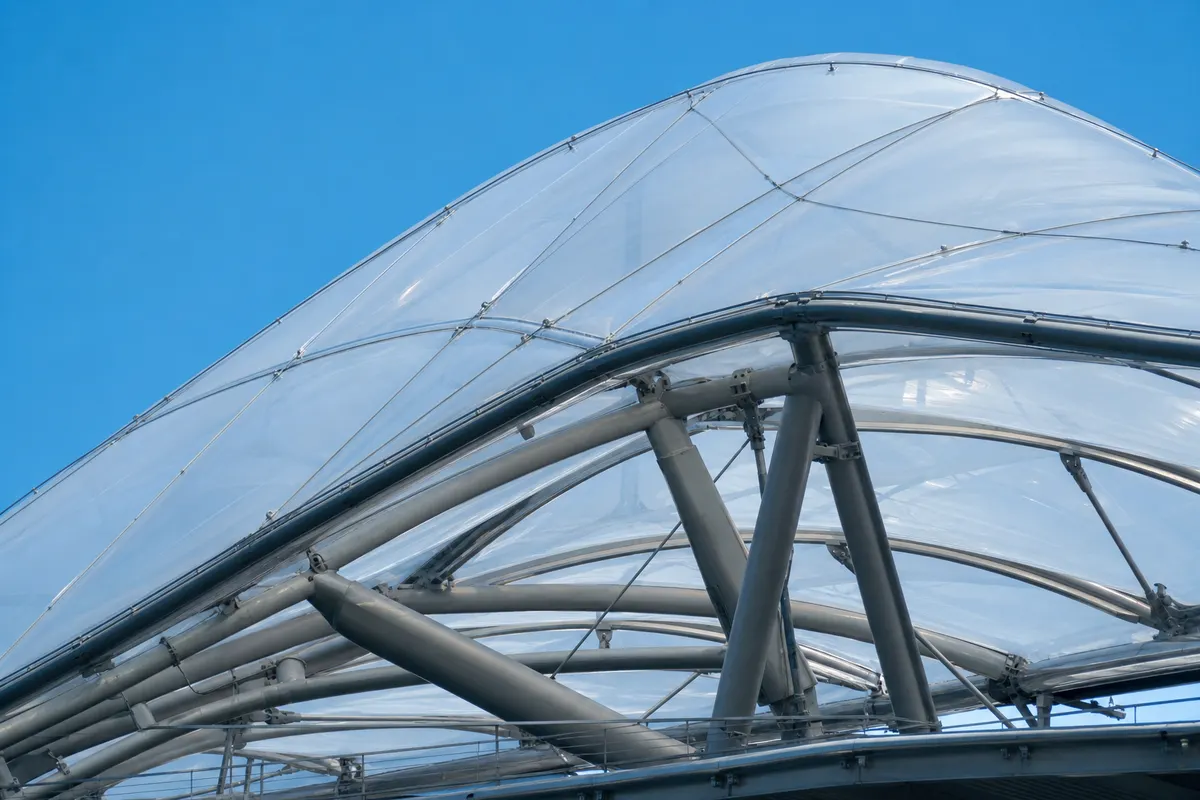
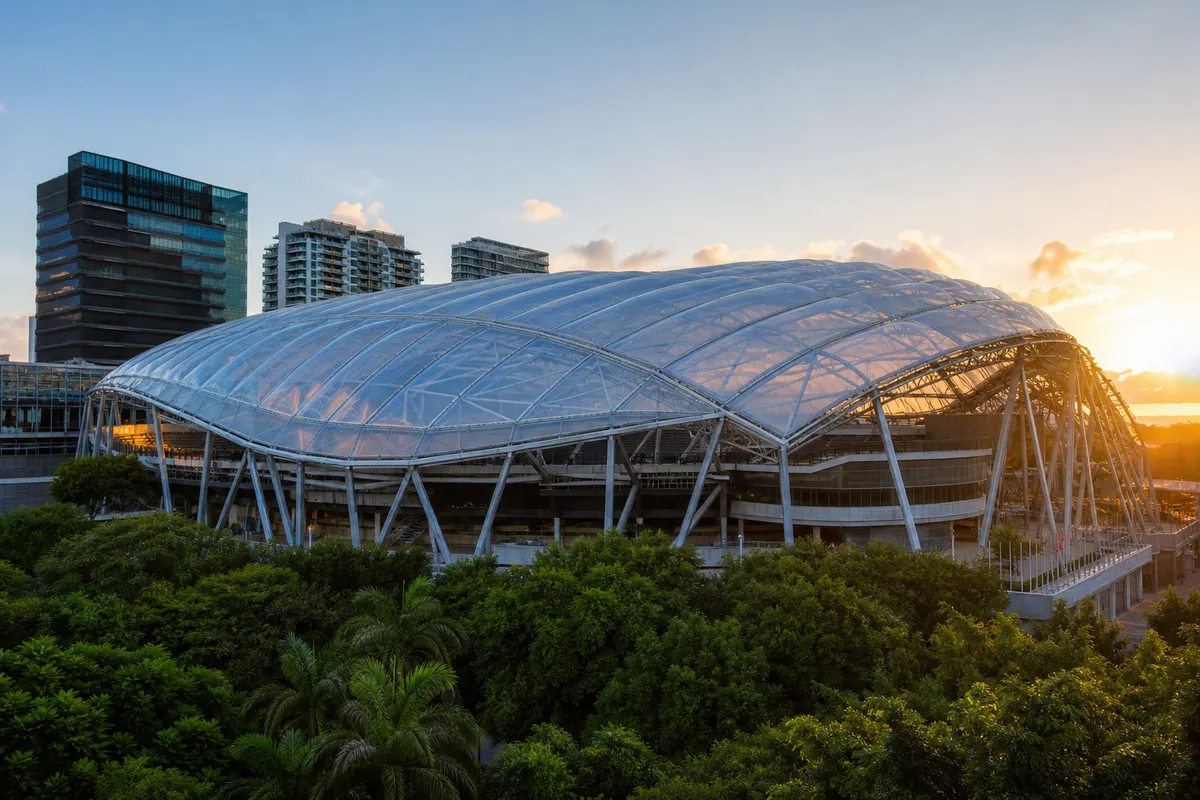
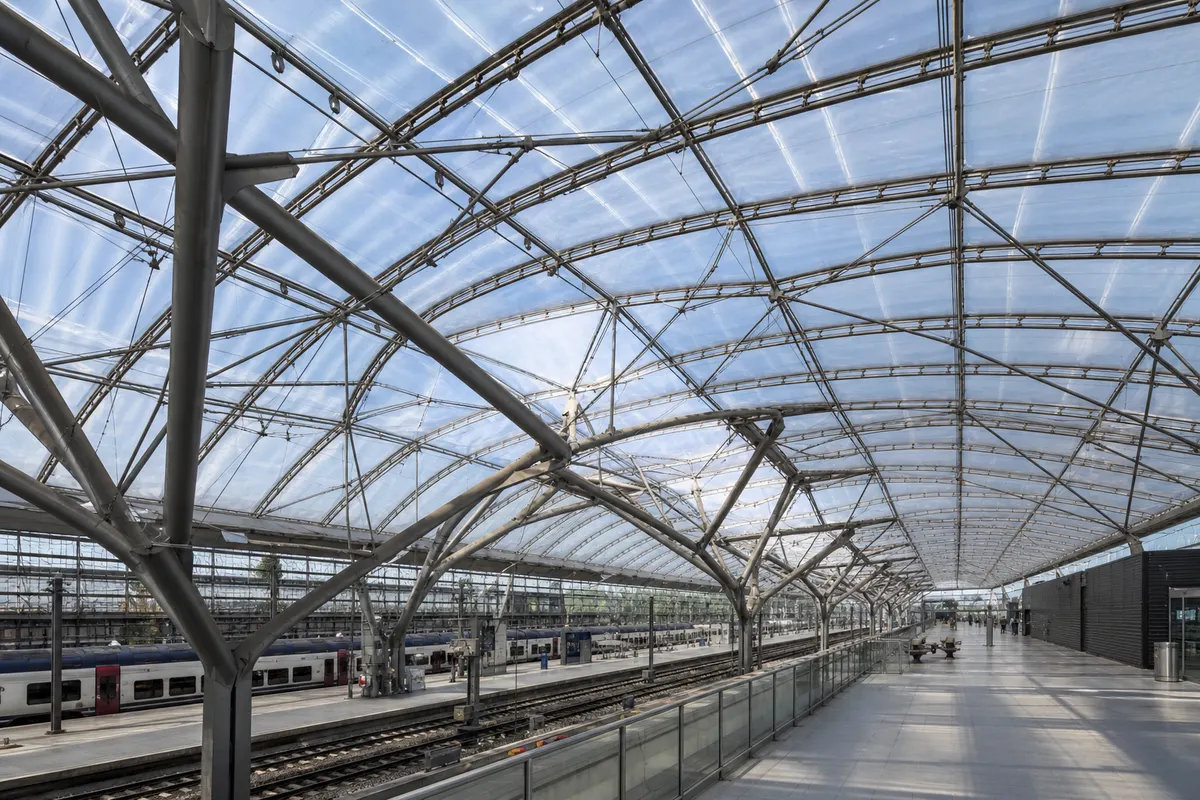
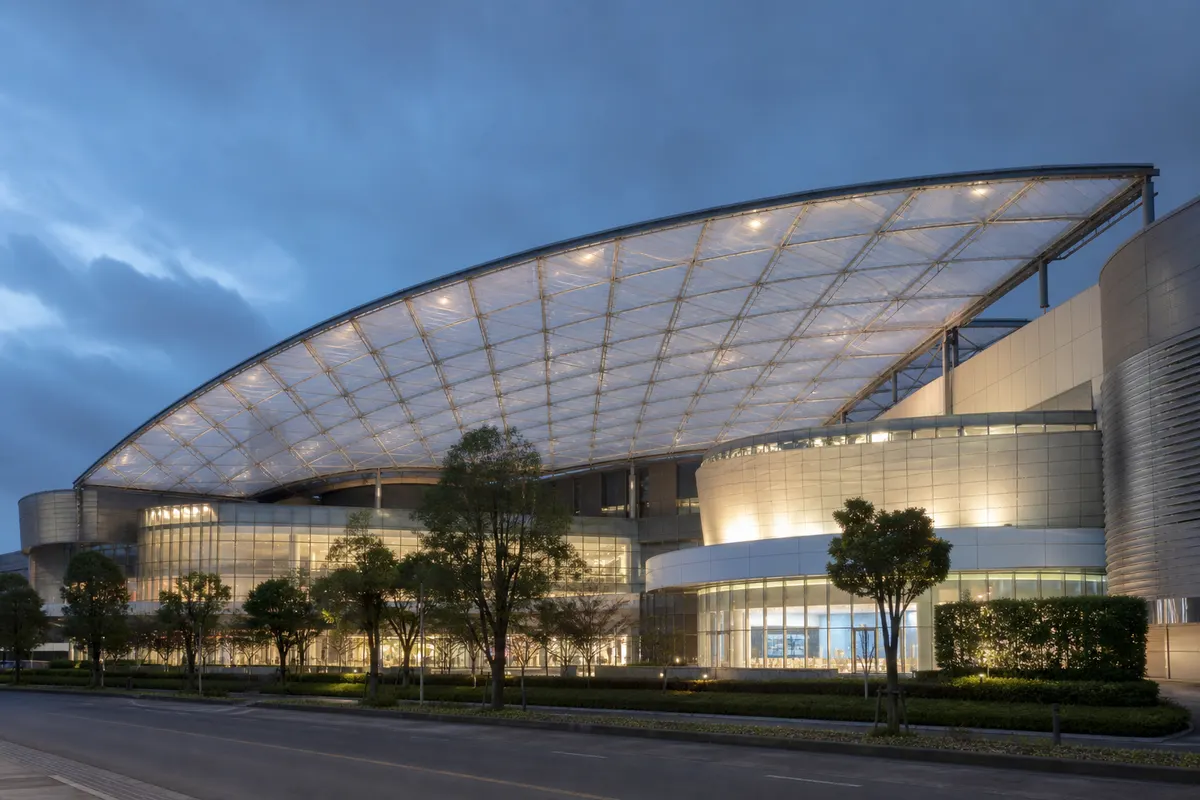
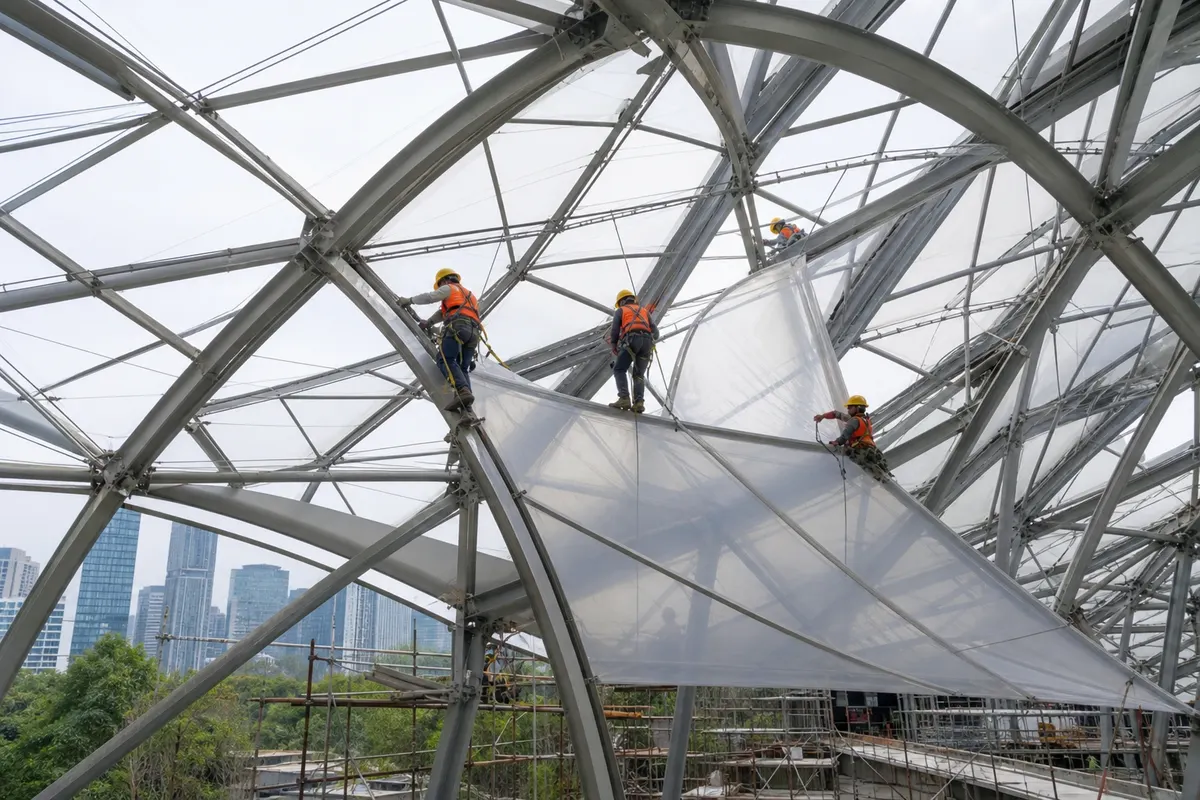
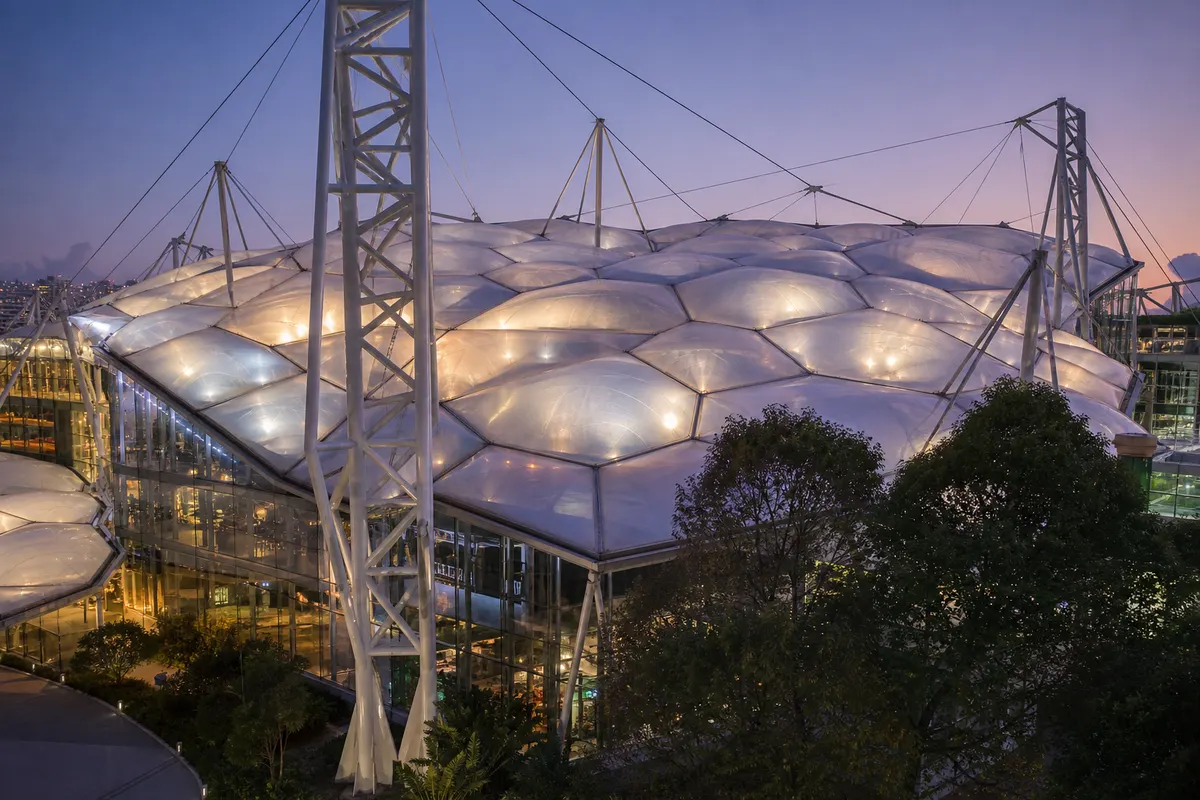
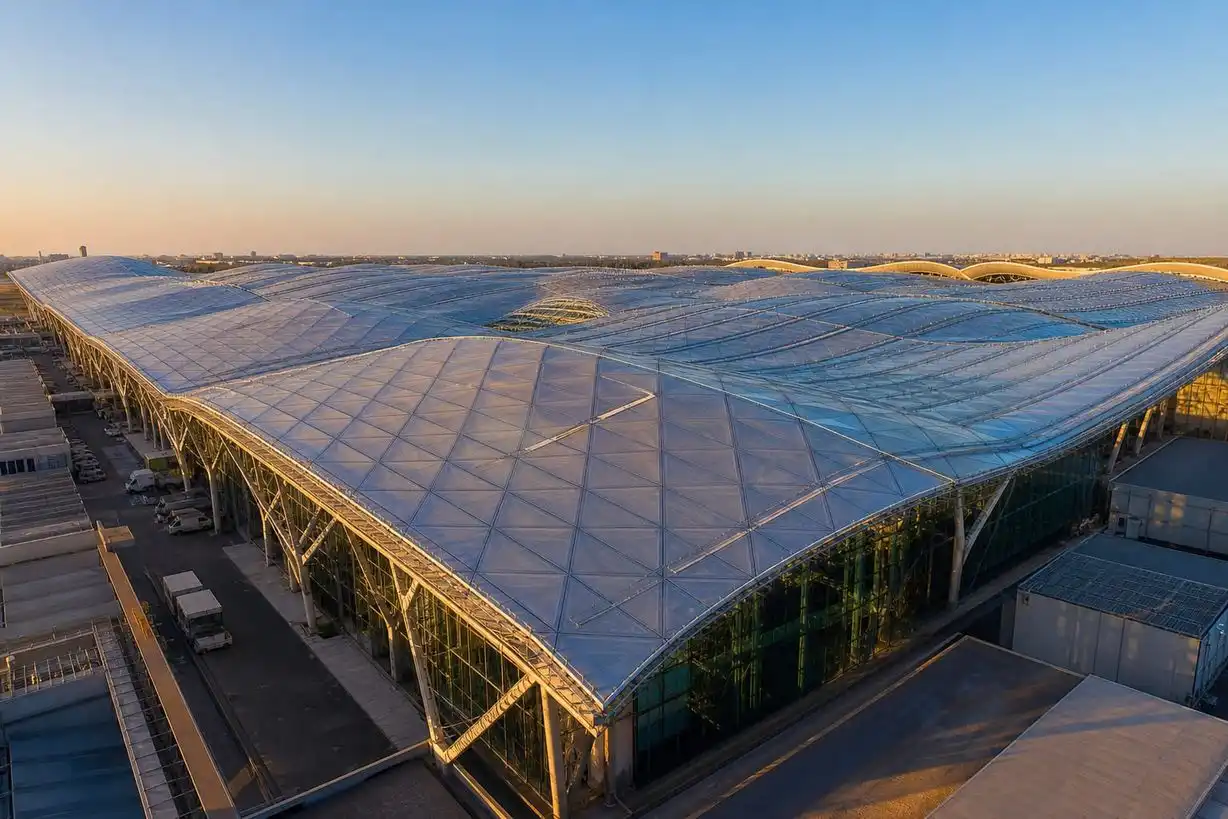
Every ETFE roofing system follows the same underlying logic, whether it is a single tensioned skin or a multi-layer inflated cushion. Foils are digitally patterned, precision-welded and assembled into panels or cushion modules in a controlled fabrication environment. Panels are then tensioned onto a steel or aluminium primary structure using aluminium clamping profiles, keder tracks or extruded frames — or, for cushion systems, inflated with low-pressure air to a design pressure at which the taut skin behaves as a stiff structural panel rather than a loose membrane.
This distinction matters for anyone specifying a roof: a single-layer membrane relies on prestress and geometry for its stiffness, while an air cushion adds the inflated cavity itself as part of the structural and thermal system. Understanding which logic applies to a given roof field is the starting point for every subsequent decision about layer count, panel geometry and detailing.