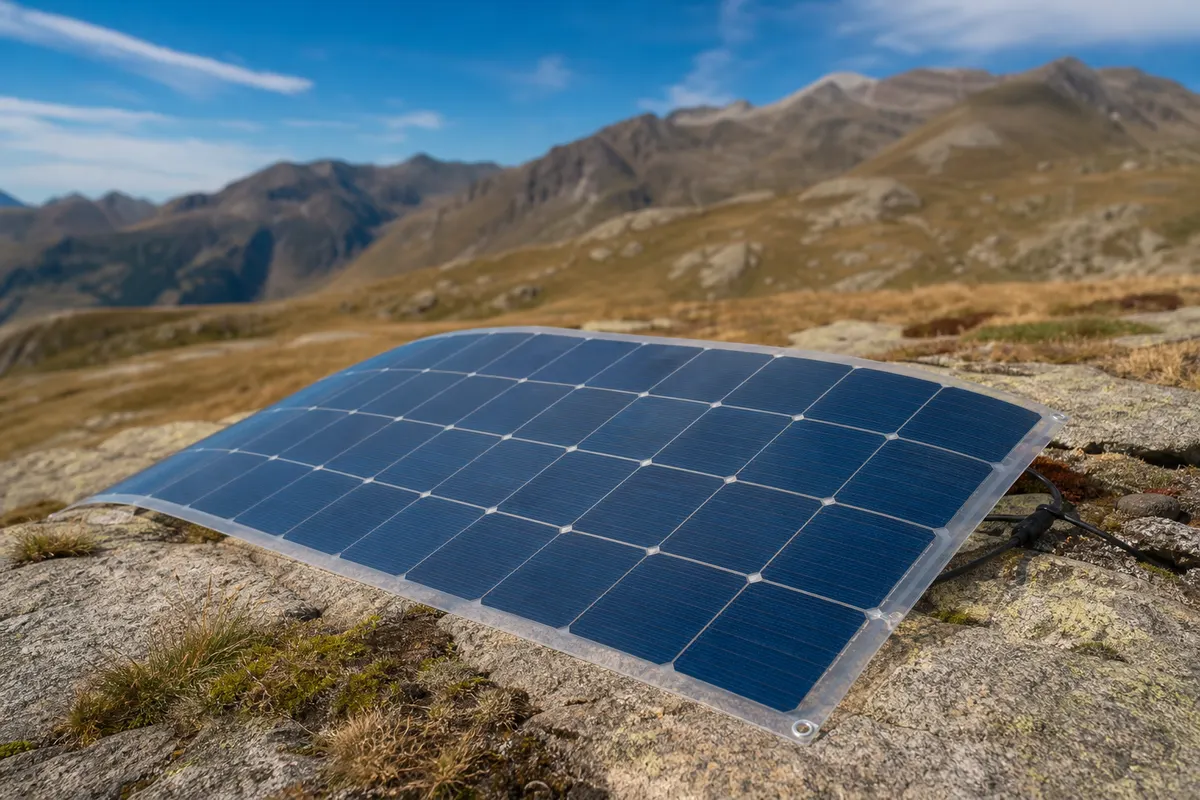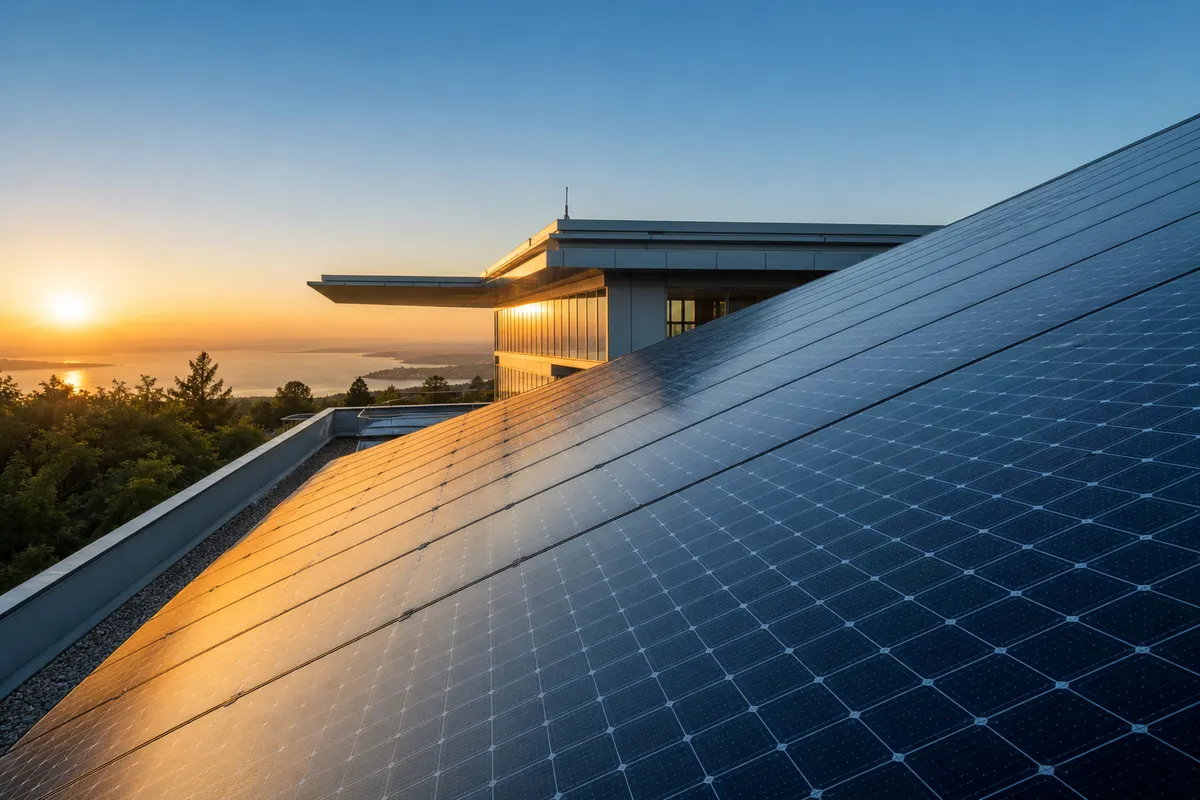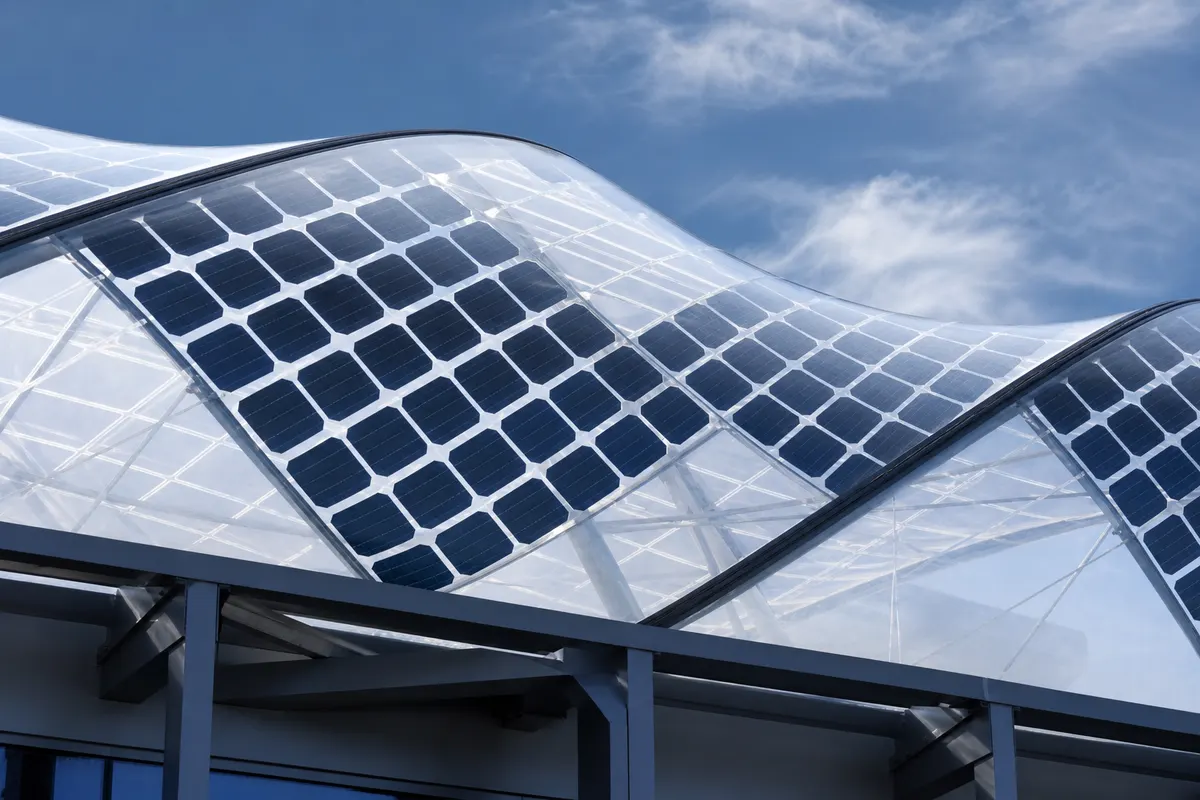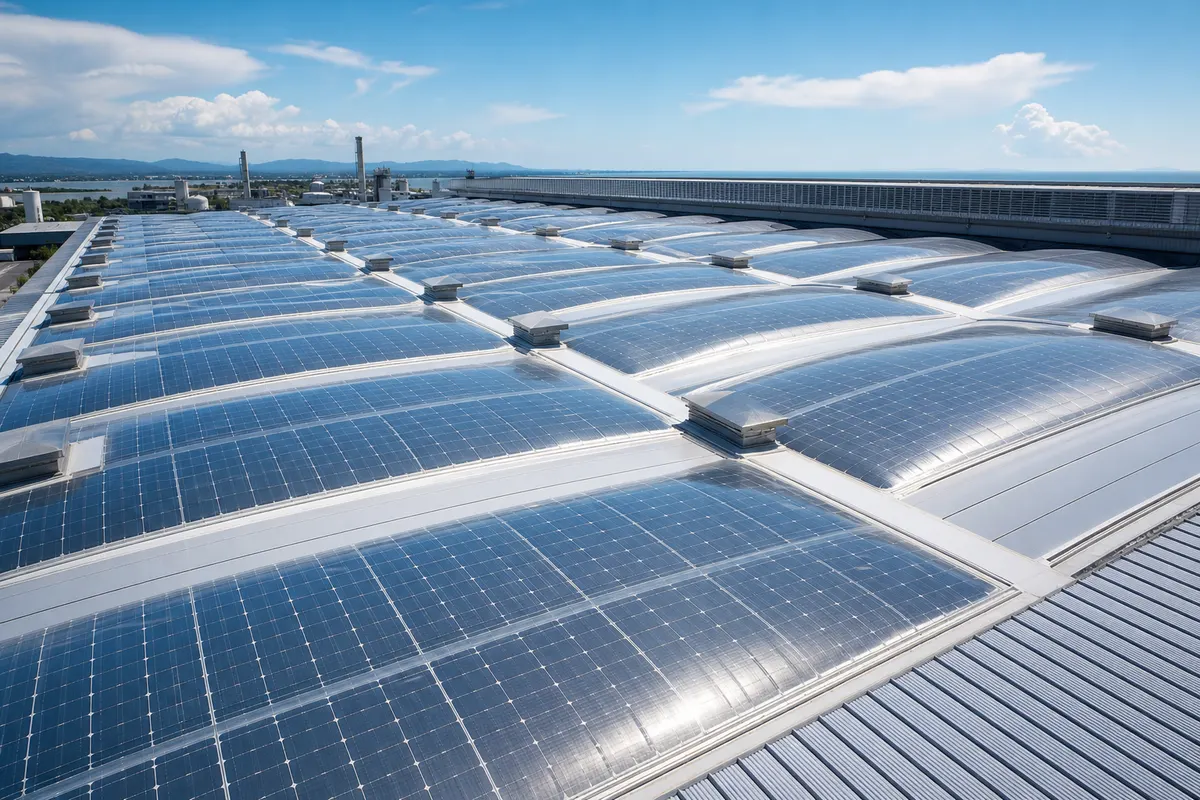


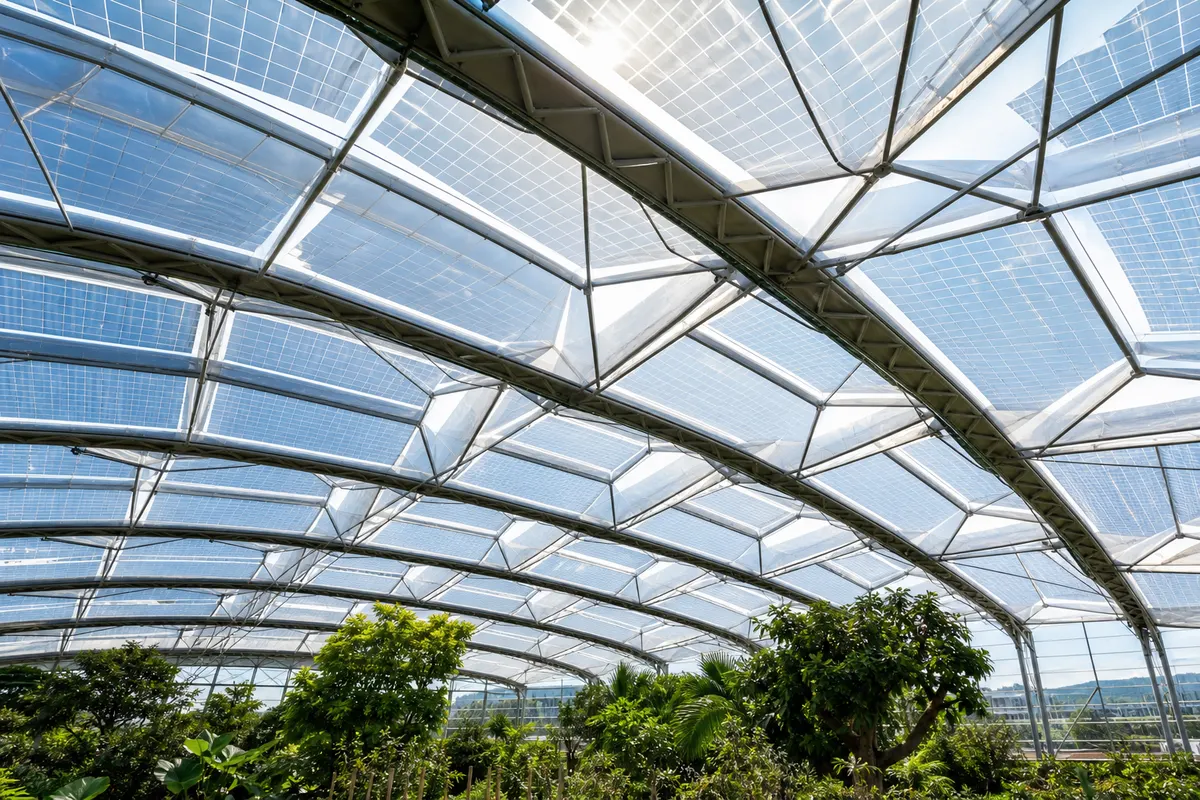
ETFE Solar Panel Film

ETFE Solar Panel Film — Front Sheet, Lamination & Encapsulation Film for PV Modules

A thin-gauge fluoropolymer film engineered as a front sheet, lamination layer and encapsulation film for photovoltaic modules — typically supplied at 50 to 100 micron for high light transmission and long outdoor durability. AAKS Architecture supplies ETFE solar lamination film and ETFE PV film for module manufacturers, EPC teams and flexible solar developers across India. From flexible foldable chargers to building-integrated rooftop programmes, the same film chemistry that makes ETFE a proven architectural membrane also makes it a dependable front sheet for the light-facing side of a solar module.

Up to 95% Light Transmission
50–100 Micron Front Sheet Gauge
25–35+ Yrs Outdoor Service Life
~99% Lighter Than Glass Fronting

Overview

What is ETFE Solar Panel Film?

ETFE (Ethylene Tetrafluoroethylene) solar panel film is a high-performance fluoropolymer film used as a front sheet, encapsulation layer and lamination film in photovoltaic module construction — a lightweight, highly transparent alternative to glass fronting, most commonly supplied in the 50 to 100 micron thickness range used for solar panel front sheets, electronics and industrial lamination. Module manufacturers turn to ETFE film when a project calls for a front-facing layer that is optically clear, chemically stable through the lamination cycle, and durable enough for years of continuous outdoor exposure — properties the same fluoropolymer family has already proven across large-span architectural roofs and façades.

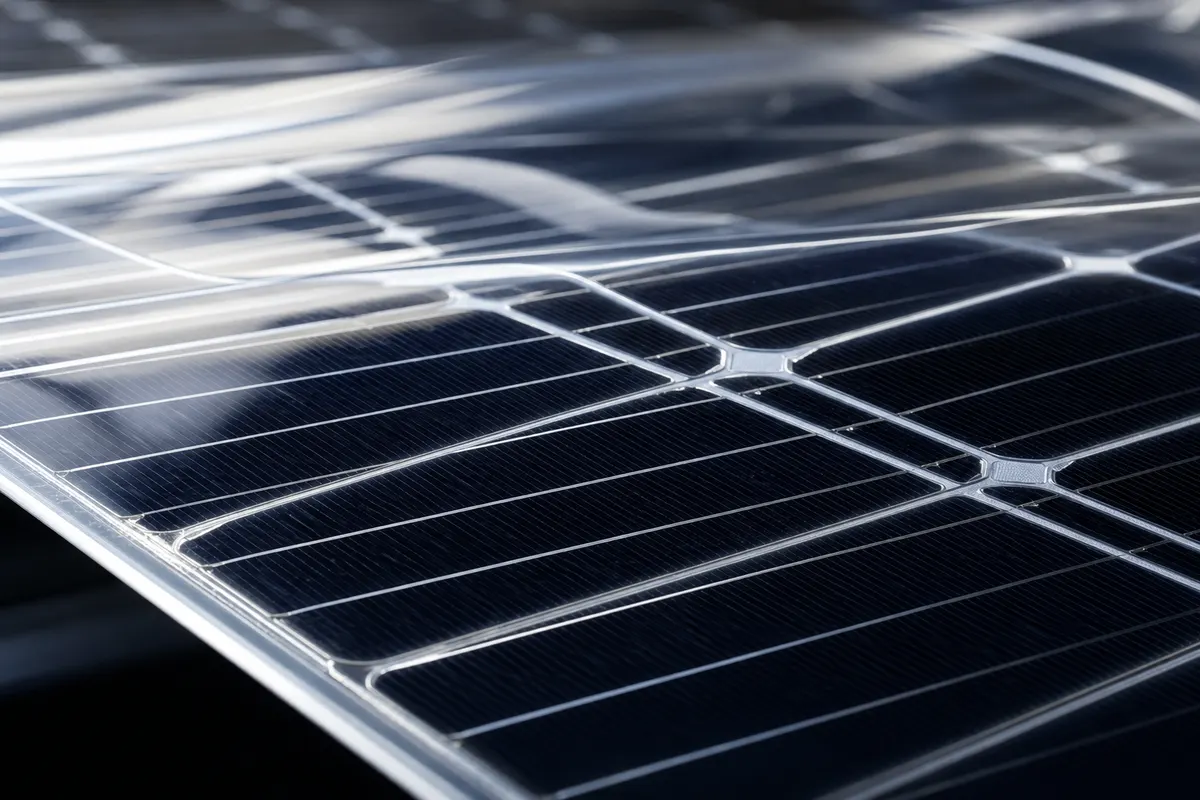
Close-up of ETFE solar panel film front sheet laminated over a photovoltaic module surface
Solar lamination membrane Thin-gauge ETFE front sheet — daylight admission without glass weight

ETFE solar panel film's advanced surface technology is dust-proof, waterproof, self-cleaning and scratch-resistant — admitting high daylight transmission to the module surface while keeping the outer face cleaner for longer between maintenance cycles. Flexible, weldable and proven in harsh outdoor climates, thin-gauge ETFE film is used as an alternative to glass and standard fluoropolymer backsheets across flexible, portable and building-integrated solar formats.

AAKS Architecture sources and supplies ETFE solar lamination film and ETFE PV film in gauge and roll widths suited to each module manufacturer's lamination line and encapsulation stack.

Up to 95% Light transmission
50–100 Micron front sheet gauge
25–35+ Years outdoor service life
~99% Lighter than glass fronting

Typical applications

  • Flexible & foldable module lamination
  • Building-integrated (BIPV) solar film
  • Portable & off-grid solar chargers
  • Marine & lightweight solar panels
  • Greenhouse-integrated solar concepts

Engineering benefits

  • High light transmission reaches the module surface
  • Ultra-light front sheet reduces module weight
  • Self-cleaning surface lowers soiling and upkeep
  • Excellent UV stability across decades outdoors

What Makes ETFE Solar Panel Film Different

Ethylene Tetrafluoroethylene, better known simply as ETFE, belongs to the fluoropolymer family of engineered plastics — the same chemical lineage that gives non-stick cookware its legendary surface performance. In solar module construction, this same low-energy, chemically inert surface is drawn into thin, optically clear film and used as a front sheet, encapsulation layer or lamination film. Unlike glass, which adds mass and rigidity to a module, ETFE film is flexible, weldable and light enough to support curved, foldable and portable panel formats where a rigid glass front is simply not an option.

For module manufacturers and solar developers researching ETFE solar panel film, ETFE PV film or ETFE encapsulation film suppliers in India, the material's appeal comes down to a rare combination: near-glass optical clarity at a fraction of the weight, decades of proven outdoor fluoropolymer durability, and a self-cleaning surface that keeps the light-facing side of the module cleaner for longer. AAKS Architecture supplies ETFE solar lamination film in gauges and roll widths matched to each customer's module design and lamination process. Because the film is inherently weldable, seams and edge details on flexible or irregular module shapes can be closed cleanly, which is difficult to replicate with a rigid glass front sheet.
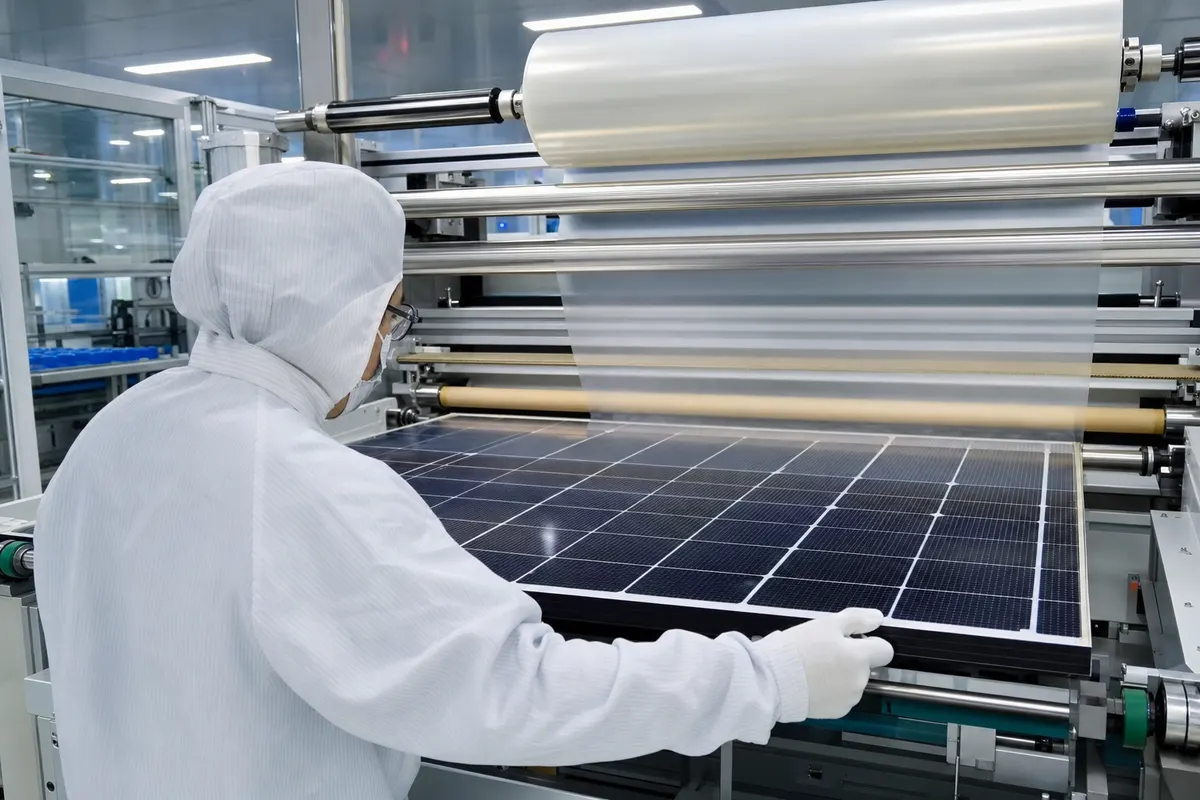
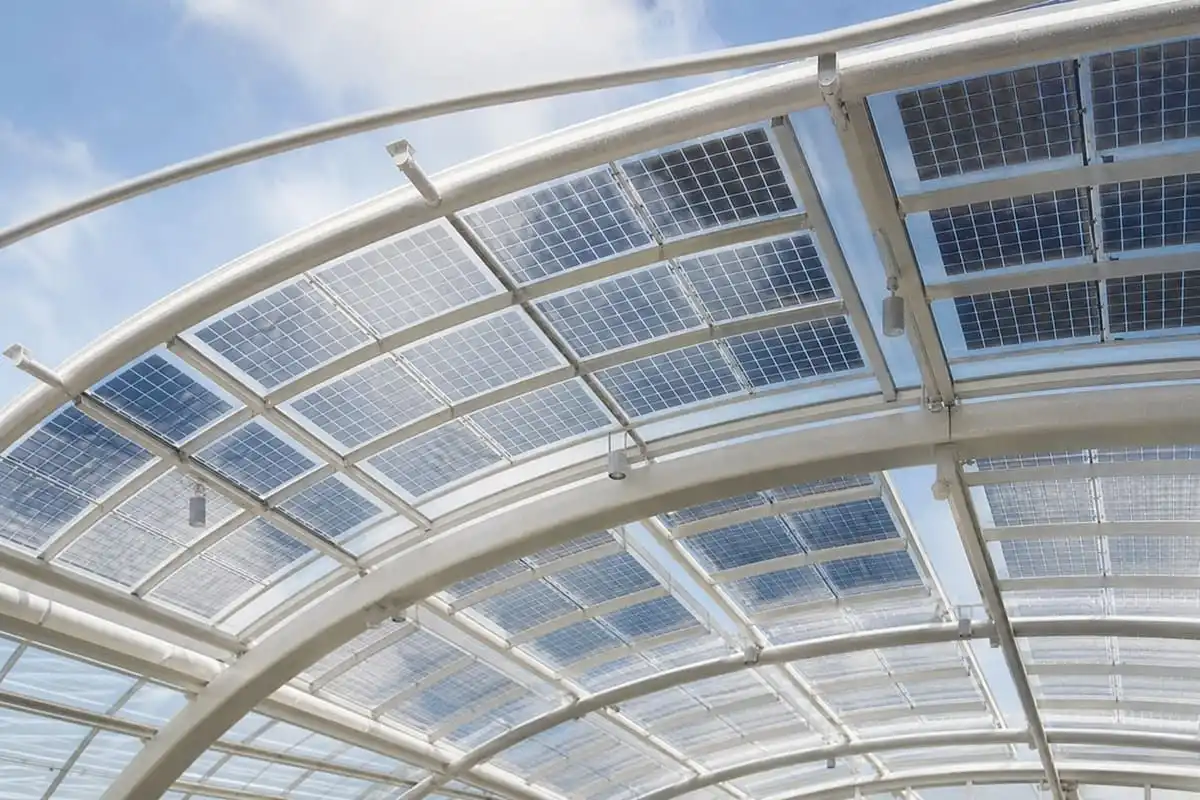
Roll of ETFE solar panel film prepared for photovoltaic module lamination

How ETFE Solar Lamination Film Is Fabricated and Applied

Every ETFE solar film supply programme begins with the same question: what role should the film play in the module build-up — a standalone front sheet, part of a full encapsulation stack alongside EVA or POE encapsulant, or a protective lamination layer over a flexible cell substrate? The answer shapes everything downstream: film gauge, roll width, surface treatment and how the film is fed into the module manufacturer's vacuum lamination line. AAKS supplies film cut and slit to the customer's specification, so lamination teams can integrate it into existing process lines with minimal change.

Because ETFE solar film is supplied in rolls of controlled width and gauge, module manufacturers can plan lamination runs against known material properties rather than variable sheet stock. This consistency matters for lamination quality — uniform gauge and surface finish support predictable adhesion to encapsulant layers and repeatable results across production batches, whether the end product is a rigid rooftop module or a flexible, foldable solar panel. AAKS works with each customer's process engineers to confirm roll dimensions, core specification and packaging that suit their unwind and feed equipment before committing to a production order.

Fabrication and slitting of ETFE film rolls prepared for solar lamination

Where ETFE PV Film Performs Best

ETFE solar panel film earns its place on projects where glass fronting is impractical and standard backsheet plastics cannot match the optical clarity, flexibility or outdoor lifespan required. Flexible and foldable module developers use it to build lightweight, rollable and portable solar products for camping, marine, off-grid and emergency power use cases. Building-integrated photovoltaic (BIPV) façade and rooftop concepts benefit from a film that admits daylight while withstanding sun, rain and temperature swings for decades. Greenhouse-integrated solar concepts and industrial rooftop programmes round out a use case list that spans consumer, commercial and infrastructure-scale solar development. In each case, the underlying requirement is the same: a front-facing film that stays optically clear, mechanically sound and chemically stable long after installation, regardless of whether the finished product sits on a rooftop, a façade, a boat deck or a backpack.

Flexible photovoltaic module fronted with ETFE solar film installed on a curved surface

Front Sheet, Encapsulation or Both — Choosing the Right ETFE Solar Film Configuration

Not every module needs the same ETFE build-up. A single ETFE front sheet is often the right specification when the goal is a durable, high-transmission cover layer over an existing encapsulation stack — replacing glass without redesigning the rest of the module. A fuller ETFE encapsulation film role, working alongside EVA or POE encapsulant, is preferred when the module design calls for the film to also contribute to weatherproofing and mechanical protection of the cell layer beneath. AAKS reviews module type, target weight, flexibility requirements and lamination line capability with each customer before recommending a gauge and configuration, rather than defaulting to a single specification. Sample rolls and short lamination trials are often the fastest way to confirm adhesion and handling behaviour before committing to a full production order.

ETFE solar film sample showing front sheet and encapsulation layer configuration

Supply of ETFE Solar Film Rolls Across India

As a supplier of ETFE solar panel film, ETFE solar sheet and ETFE PV film, AAKS Architecture works with module manufacturers, EPC contractors and flexible solar product developers who need film supplied to a defined gauge, width and quality standard for their lamination line. Every enquiry is reviewed against the customer's module drawings and lamination process rather than answered with a generic price list, because gauge, roll width and surface specification all affect fit into an existing production line. Teams researching ETFE film for solar panel lamination, planning a new flexible module line, or sourcing an ETFE solar lamination film roll for an upcoming production run are encouraged to share their specification for an accurate, project-specific quotation.

Because supply is roll-based and pre-specified to gauge and width, module manufacturers can plan procurement around known lead times rather than variable sheet-stock availability. This supports both established production lines scaling up volume and newer flexible-panel developers validating a lamination process for the first time.

ETFE solar panel film roll stock prepared for supply to module manufacturers

Durability and Lifecycle Value of ETFE Solar Panel Film

Beyond daylight admission and weight savings, ETFE solar panel film supports genuinely lower lifecycle cost at the module level. A front sheet that weighs a fraction of an equivalent glass front reduces the overall mass a mounting structure or flexible substrate must carry, which matters most in portable, marine and building-integrated formats. Over a multi-decade outdoor service life, excellent UV stability and a self-cleaning surface that resists dust adhesion combine to keep the light-facing side of the module performing consistently with less manual cleaning than a comparable glass or standard plastic front. For manufacturers evaluating ETFE film against glass or conventional backsheet fluoropolymers on a total-cost-of-ownership basis, these film-level durability advantages are often as relevant as the upfront material cost.

Weathered ETFE solar film front sheet retaining clarity after years of outdoor exposure

Solar Module Manufacturers

Manufacturers specify ETFE solar panel film for its optical clarity, weldable geometry and compatibility with vacuum lamination lines when building flexible, lightweight or glass-alternative module formats. AAKS supports gauge selection and fabrication coordination from sample through production supply, including packaging and roll specifications matched to each customer's feed equipment.

Flexible & BIPV Panel Developers

Developers of flexible, foldable and building-integrated solar products rely on ETFE's flexibility and weight advantage to realise curved, portable and façade-mounted module formats that rigid glass fronting cannot achieve.

EPC & Renewable Energy Developers

EPC contractors and renewable energy developers evaluating ETFE film for solar module programmes need documented film-level physical properties and weatherability data to specify with confidence. AAKS provides technical support and specification assistance through procurement and delivery, coordinating with module suppliers on gauge and configuration ahead of project rollout.

Off-Grid & Portable Solar Brands

Off-grid, marine and portable solar product brands value ETFE film's light weight, flexibility and outdoor durability for foldable chargers and lightweight panels used away from fixed infrastructure.

Note: This page describes the properties and applications of the ETFE film component used in solar module construction. AAKS Architecture does not manufacture photovoltaic cells and does not publish PV cell efficiency, wattage or power-output figures — those depend on the cell technology and module design supplied by the module manufacturer. Values referenced here are typical / manufacturer-dependent film properties from AAKS technical knowledge documentation. Always confirm project-specific data sheets and lamination trials before finalising a module specification.

Capabilities

Key Features

Film-level advantages of ETFE solar panel film for PV module construction.

High Light Transmission

Transmits up to 95% of natural daylight to the module surface, keeping the light-facing side of the panel bright and optically clear.

Thin-Gauge Front Sheet

Typically supplied at 50–100 micron for solar front sheet, lamination and encapsulation roles — a fraction of the thickness of a glass front.

Self-Cleaning Surface

A smooth, low-energy fluoropolymer surface resists dust and dirt adhesion, letting rainfall naturally rinse the module face clean.

UV Stable & Long-Lasting

Outstanding UV resistance means the film does not yellow or embrittle, maintaining clarity for 25–35+ years of outdoor exposure.

Flexible & Weldable

Flexible and weldable into curved, foldable and portable module geometries — enabling flexible panel formats rigid glass cannot achieve.

Waterproof & Weather Resistant

Fully waterproof with excellent resistance to rain, humidity and temperature extremes, engineered for continuous outdoor module exposure.

Chemically Resistant

Resists the acids, alkalis and encapsulant chemistries encountered during lamination, supporting stable long-term bonding within the module stack.

Lamination-Line Ready

Supplied in controlled roll gauge and width, ready to feed directly into vacuum lamination lines without additional processing.

Engineering Data

Technical Specifications

Typical film-level values for guidance. Confirm project-specific data sheets before specification.

Parameter Typical Value
Material ETFE (Ethylene Tetrafluoroethylene)
Density 1.70–1.75 g/cm³
Typical Front Sheet Weight Fraction of glass fronting at equivalent area
Light Transmission Up to 95%
UV Transmission 90–95%
Tensile Strength 40–55 MPa (elongation at break ~300%)
Working Temperature Range -200°C to +150°C (melting point ~270°C)
Fire Behaviour Self-extinguishing; water absorption nearly zero

Material Options

Available Thickness

Solar lamination work centres on the 50–100 micron range; heavier gauges are shown for broader film context.

Thickness Typical Applications
50 Micron Solar panel front sheet, electronics, lamination
100 Micron Solar panels, greenhouses, industrial lamination
150 Micron Greenhouses, façades, interior cushions
200 Micron Double-layer cushion roofs, skylights
250 Micron Stadium roofs, airport roofs, large air cushion structures
300 Micron Heavy-duty cushion roofs, large-span architectural structures

Performance

Performance Characteristics

Built for demanding outdoor solar module exposure and long service life.

Waterproof

100% waterproof front sheet that prevents moisture ingress, engineered for continuous outdoor exposure across the module's service life.

UV Resistant

Exceptional UV stability with 90–95% UV transmission — the film does not yellow under prolonged sunlight and retains clarity for 25–35+ years.

Self Cleaning

An extremely smooth, low-surface-energy finish resists dust adhesion, so rainfall naturally washes the module face clean and lowers upkeep.

Weather Resistant

Engineered to perform against rain, dust, humidity and temperature extremes across the outdoor life of a laminated solar module.

Fire Resistant

A self-extinguishing material that does not promote flame spread; it softens under high heat rather than shattering like a glass front.

Impact & Flex Resistant

Flexible, tear-resistant construction tolerates handling, bending and minor impact far better than a rigid glass front sheet.

Chemical Resistant

Highly resistant to acids, alkalis and the encapsulant chemistries used in lamination — well suited to industrial and coastal module deployments.

Long Service Life

A 25–35+ year film-level service life supports module designs intended for long-term outdoor deployment with minimal front-sheet degradation.

Why Choose This Film

Advantages

Module-level outcomes that matter across design, lamination and lifecycle cost.

01

Lighter Modules & Structures

A thin ETFE front sheet reduces module weight versus glass fronting, easing mounting structure and handling requirements.

02

High Daylight Admission

Up to 95% light transmission reaches the module surface, supporting a bright, optically clear light-facing side.

03

25–35+ Year Film Durability

Excellent UV and weather resistance keeps the front sheet clear and structurally sound over decades of outdoor exposure.

04

Reduced Soiling & Maintenance

A self-cleaning, dust-resistant surface means less manual cleaning of the module face than conventional glass fronting.

05

Freedom for Flexible Formats

Flexible, weldable film supports curved, foldable and portable module geometries that rigid materials cannot match.

06

One Accountable Film Supply Partner

AAKS Architecture manages gauge selection, fabrication and supply end-to-end, reducing coordination risk for module manufacturers.

Material Comparison

Compare with Alternatives

High-level film comparison for early design decisions. Lamination trials and project engineering always govern.

Feature ETFE Film Glass Front Standard Fluoropolymer Backsheet PET / TPT Backsheet
Weight Very light (~99% lighter than glass at equivalent area) Heavy — adds significant module mass Lightweight film Lightweight film
Light Transmission Up to 95% 80–90% Not applicable (rear-facing, opaque) Not applicable (rear-facing, opaque)
UV Resistance Excellent — does not yellow Excellent Good to excellent, grade dependent Moderate — can degrade faster under prolonged UV
Flexibility High — supports curved & foldable formats Rigid, not flexible Flexible film Flexible film
Typical Role Front sheet, encapsulation, lamination film Front cover on rigid modules Rear backsheet Rear backsheet
Service Life 25–35+ years (film-level) Long, but adds weight/breakage risk Good long-term durability Shorter typical field life than fluoropolymer options

Delivery

Supply & Lamination Support Process

From gauge selection to production supply — one accountable film partner.

  1. 1

    Discover

    Module type, lamination line and performance brief.

  2. 2

    Concept

    Gauge, roll width and configuration intent.

  3. 3

    Engineer

    Specification review and quality coordination.

  4. 4

    Fabricate

    Precision slitting, roll preparation and QA.

  5. 5

    Supply

    Roll dispatch aligned to production schedules.

  6. 6

    Support

    Lamination trial feedback and ongoing supply.

Slitting and quality checking of ETFE solar panel film rolls before dispatch

Media

Video Gallery

Poster-first playback of ETFE solar panel film explainers and lamination footage.

Overview of ETFE solar panel film properties, gauge and PV module applications
ETFE solar film applied to a flexible, building-integrated module concept
Roll preparation and lamination-line supply of ETFE solar panel film

Support

Frequently Asked Questions

Answers drawn from AAKS Architecture technical documentation.

What is ETFE solar panel film?

ETFE solar panel film is a thin-gauge fluoropolymer film used as a front sheet, encapsulation layer or lamination film in photovoltaic module construction. It admits high daylight transmission while protecting the module's internal layers from UV, moisture and weathering, and is used as a lightweight alternative to glass in flexible and rigid module formats.

What thickness of ETFE film is used for solar lamination?

Solar-grade ETFE film is most commonly supplied in the 50 to 100 micron range. 50 micron gauges are typically associated with front sheet, electronics and lamination roles, while 100 micron gauges are used across solar panels, greenhouses and industrial lamination — the exact gauge is confirmed against each module design and lamination process.

What is the difference between an ETFE front sheet and a standard backsheet?

A front sheet sits on the light-facing side of the module and must combine high optical transmission with UV and weather stability, whereas a backsheet on the rear face prioritises weatherproofing and electrical insulation rather than transparency. ETFE film's clarity, weldability and low-energy surface make it a candidate for front-sheet and encapsulation roles where daylight admission matters.

Can ETFE film be used for flexible or foldable solar panels?

Yes. ETFE film is flexible and weldable, which supports flexible, curved, foldable and lightweight module formats used in portable, off-grid, marine and building-integrated solar applications where rigid glass fronting is impractical.

Does ETFE solar film change a panel's electricity output or efficiency?

AAKS Architecture supplies the ETFE film component of a module build-up and does not publish photovoltaic cell efficiency or power-output figures, since those depend on the cell technology, module design and manufacturer rather than the film alone. What we can confirm is film-level performance — light transmission, UV transmission, weatherability and gauge — and we recommend module manufacturers validate electrical performance through their own testing.

How long does ETFE solar panel film last outdoors?

ETFE film is known for excellent UV and weather resistance, typically supporting a service life of 25 to 35-plus years in architectural and outdoor applications. Actual lifespan in a laminated module depends on encapsulant chemistry, lamination quality, frame detailing and site environment, so we provide project-specific guidance rather than a single blanket figure.

Do you supply ETFE film rolls only, or complete lamination support?

Both. AAKS Architecture can supply ETFE film rolls in specified gauge and width for your lamination line, or work alongside module manufacturers and EPC teams on gauge selection, fabrication planning and quality coordination for a solar film programme.

Can ETFE solar film be used in greenhouses with integrated solar or BIPV façades?

Yes. ETFE's high light transmission and UV stability make it suitable for greenhouse-integrated solar concepts and building-integrated photovoltaic (BIPV) façade and rooftop applications, where daylight for the space and durability of the film both matter alongside the embedded PV component.

Ready to Specify ETFE Solar Panel Film?

Whether you need supply-only film rolls or lamination coordination support, AAKS Architecture is ready to support your solar module programme.